Electric vehicles require special care when they break down or need to be transported. While some gas-powered vehicles can be moved using a standard tow dolly, this towing method is usually not recommended for an EV.
Most electric vehicles cannot be safely dolly-towed because two wheels remain on the road. As those wheels rotate, they may also turn parts of the electric motor and drivetrain. This unwanted movement can affect the motor, battery system, and other sensitive electrical components.
The correct towing method depends on the vehicle manufacturer and model. However, for most electric vehicles, a flatbed tow truck is the safest and most reliable option.
What Is Dolly Towing?
A tow dolly is a small towing platform that lifts either the front or rear wheels of a vehicle. The other two wheels remain on the ground and continue rolling while the vehicle is transported.
This method may be suitable for certain gas-powered vehicles because their transmission can sometimes be placed in neutral and safely disconnected from the driven wheels. Electric vehicles work differently. Many EVs do not use a traditional transmission, and placing the vehicle in neutral may not fully separate the electric motor from the wheels.
Even when the dashboard shows that an EV is in neutral, parts of the motor or drivetrain may still rotate as the vehicle is pulled. This is why neutral should not automatically be treated as permission to tow an electric vehicle with two wheels on the road.
Why Dolly Towing Can Damage an EV
Electric vehicles use their motors, wheels, and braking systems differently from conventional vehicles.
During normal driving, many EVs use regenerative braking. This system captures some of the energy created by the movement of the wheels and sends it back to the battery. It helps improve driving range and reduces the amount of energy lost during braking.
When an EV is dolly-towed, the wheels left on the road continue turning. This movement may cause the electric motor to rotate and generate electricity. Because the vehicle is switched off and is not operating under normal driving conditions, that energy may not be managed correctly.
Improper towing may lead to:
- Damage to the electric motor
- Battery or electrical-system problems
- Overheating
- Damage to the drivetrain
- Problems with regenerative-braking components
- Expensive repairs
Damage may not always be immediately visible. The vehicle might appear normal after being towed, but warning lights, unusual noises, charging problems, or reduced performance could appear later.
Does Putting an EV in Neutral Make It Safe to Tow?
No. Placing an electric vehicle in neutral does not always make standard dolly towing safe.
In many EVs, neutral is designed to allow the vehicle to roll for a short distance. It may be useful when moving through an automatic car wash, repositioning the vehicle, or loading it onto a flatbed truck.
Some electric vehicles also include a Tow Mode, Transport Mode, or Car Wash Mode. These settings may release the parking brake and allow the vehicle to roll during loading. However, they are not usually designed for long-distance towing with the wheels turning on the road.
The name and function of these settings vary between manufacturers. A transport setting that is safe for loading one EV may not be suitable for towing another.
Always check the owner’s manual before moving the vehicle. If the manual does not clearly approve dolly towing, the safest choice is to request a flatbed.
Standard Tow Dollies vs. Professional Wheel Dollies
There is an important difference between a standard tow dolly and the professional wheel dollies used by some towing companies.
A standard tow dolly lifts only two wheels. The other two remain in contact with the road and rotate during transport.
Professional wheel dollies are smaller platforms placed underneath the wheels that would otherwise remain on the ground. When used with a wheel-lift tow truck, they can keep all four vehicle wheels off the road.
Some electric vehicles may be transported using a wheel lift combined with four-wheel dollies. However, this method should only be used when the vehicle manufacturer permits it and the towing operator has the correct equipment and experience.
Wheel dollies are also usually more suitable for short-distance recovery than for routine long-distance transportation. When there is any uncertainty about the vehicle’s requirements, flatbed towing remains the better option.
Why Flatbed Towing Is Usually Safest for EVs
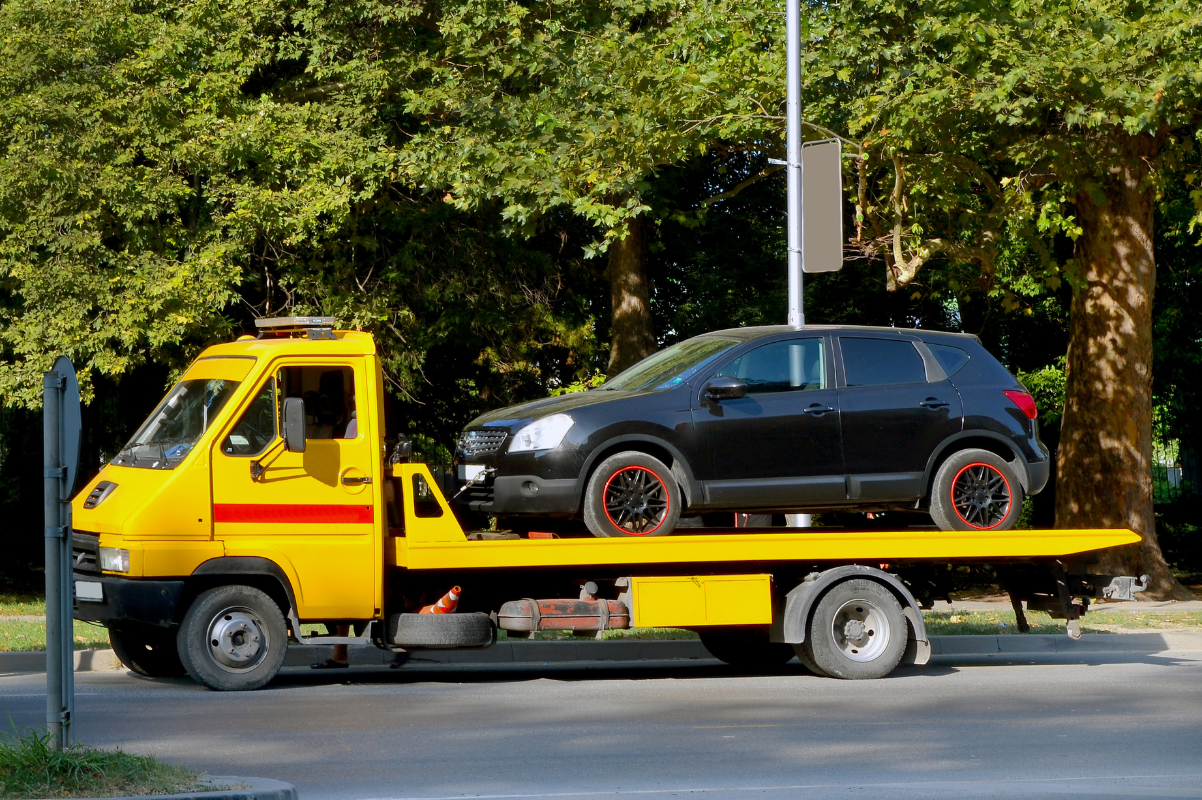
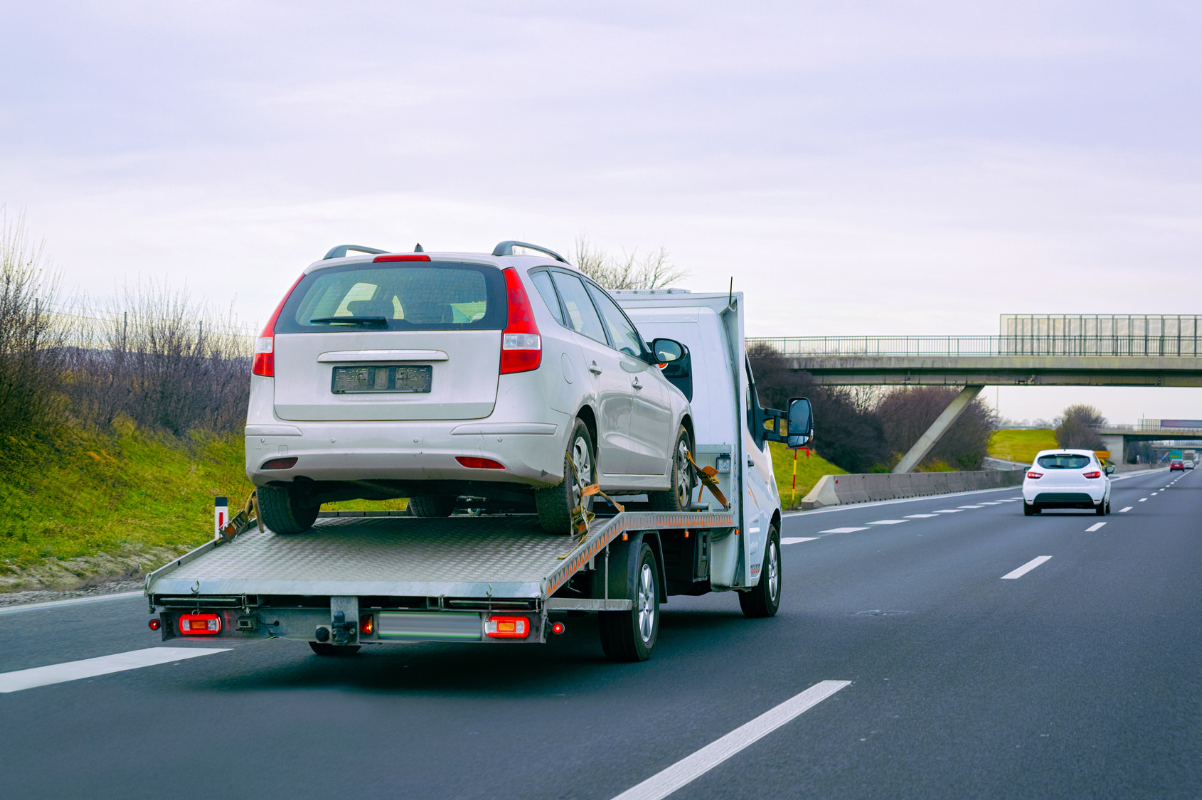
A flatbed tow truck carries the entire vehicle on a raised platform. Once the EV has been loaded and secured, all four wheels remain off the road throughout the journey.
Keeping the wheels stationary helps prevent unwanted movement in the motor and drivetrain. It also reduces the risk of damaging the regenerative-braking system or creating electrical problems while the vehicle is being transported.
Flatbed towing can also help protect:
- Low front and rear bumpers
- Underbody panels
- The high-voltage battery casing
- Tires and wheels
- All-wheel-drive systems
- Suspension and drivetrain components
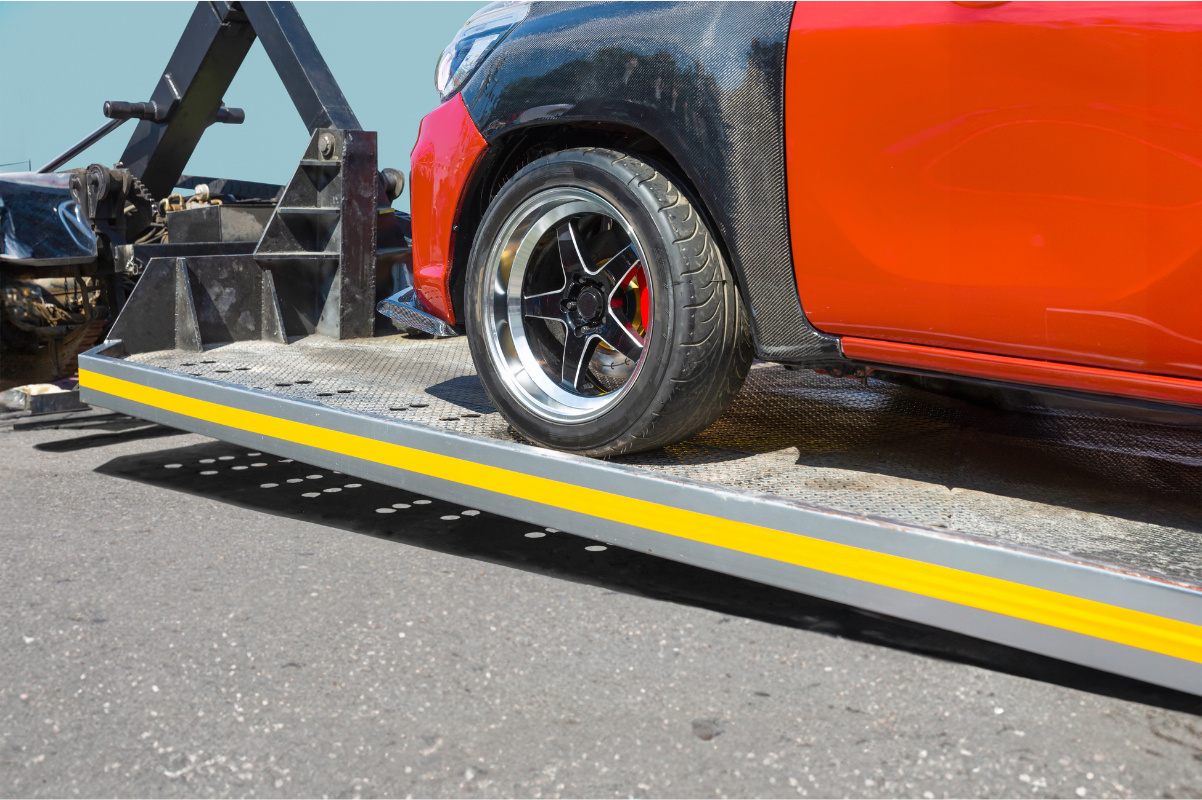
Although flatbed towing is usually the safest method, the loading process still needs to be handled correctly. Electric vehicles may have low ground clearance, heavy battery packs, electronic parking brakes, and specific recovery points.
The operator should pull the vehicle using manufacturer-approved attachment points and avoid placing hooks, chains, or lifting equipment near the battery casing or high-voltage components. Low-angle loading equipment may also be needed to prevent bumper or underbody damage.
What to Do If Your EV Breaks Down
If your electric vehicle loses power or develops a problem, move it to a safe location when possible. Turn on the hazard lights and keep yourself and your passengers away from moving traffic.
When calling a towing company, tell the dispatcher:
- That the vehicle is fully electric
- The vehicle’s make and model
- Your exact location
- Whether the car is stuck in Park
- Whether the wheels are locked
- Whether the battery is completely discharged
- Whether the vehicle has been involved in a collision
- Whether you can see any warning messages or visible damage
Providing these details helps the towing company choose the correct truck and loading equipment. Ask for a flatbed tow truck unless the owner’s manual clearly allows a different method.
Do not try to pull the EV using a rope, chain, or another vehicle. You should also avoid allowing anyone to drag the vehicle with locked wheels. Dragging can damage the tires, drivetrain, brakes, and electric motor.
If the high-voltage battery is completely discharged, the electronic parking brake or gear selector may not operate normally. A trained tow operator may need to use the vehicle’s emergency release procedure or wheel dollies to load it without causing damage.
What If the EV Has Been in a Collision?
An electric vehicle involved in a collision requires extra care, especially when the battery area or underbody may have been damaged. In these situations, professional accident towing may require different recovery procedures than a standard roadside breakdown.
Do not touch exposed cables, damaged battery components, or leaking materials. High-voltage cables are often marked with bright orange insulation, but damaged electrical parts may not always be easy to identify.
If you notice smoke, fire, popping sounds, strong chemical smells, unusual heat, leaking fluid, or visible battery damage, move a safe distance away from the vehicle and contact emergency services.
Tell the towing company that the EV has been in a collision before the truck arrives. This allows the operator to prepare the appropriate recovery equipment and follow additional safety precautions.
EV Towing in Halifax, NS
Electric vehicles are becoming increasingly common on roads throughout Halifax and the surrounding areas. As more drivers switch to EVs, towing companies need the correct equipment and knowledge to transport them safely.
EV towing is not only about choosing a flatbed truck. The operator must also understand electronic parking brakes, transport settings, low-clearance loading, approved recovery points, and the location of the battery pack.
Halifax towing service – NST provides 24/7 flatbed towing and roadside assistance in Halifax, NS, and nearby communities. Our team focuses on careful vehicle handling, fast response times, professional service, and affordable pricing.
When calling for service, let the dispatcher know that your vehicle is electric and provide the make and model. This helps the towing team prepare the correct equipment before arriving.
Frequently Asked Questions
Can you tow an electric car with a tow dolly?
Most electric cars should not be transported using a standard two-wheel tow dolly. The wheels left on the road may rotate the electric motor or drivetrain and cause mechanical or electrical damage.
Some models may allow a special wheel-lift and four-wheel dolly setup. Always check the owner’s manual for the exact towing requirements.
What is the safest way to tow an EV?
Flatbed towing is generally the safest method because it keeps all four wheels off the road. This prevents unwanted wheel movement and reduces the risk of damage to the electric motor, battery system, and drivetrain.
Can an EV be towed in neutral?
Neutral may allow an EV to roll during loading or move a short distance, but it does not always disconnect the electric motor from the wheels. It should not be treated as approval for long-distance towing.
What is Transport Mode on an EV?
Transport Mode is a vehicle setting that may release the parking brake and allow the car to roll while it is being loaded or repositioned. Its exact purpose varies by manufacturer, and it does not necessarily make dolly towing safe.
Can a Tesla be dolly-towed?
Tesla vehicles generally require a flatbed or another approved method that keeps all four wheels off the ground. Owners should check the towing instructions for their exact model before allowing the vehicle to be moved.
Can an EV be towed behind a motorhome?
Most electric vehicles cannot be flat-towed or transported on a standard two-wheel dolly behind a motorhome. A full vehicle trailer that carries all four wheels is usually the safer option.
Can an EV with a dead battery be loaded onto a flatbed?
Yes, but the towing operator may need to follow a special procedure if the vehicle cannot be shifted into neutral or if the electronic parking brake will not release. Wheel dollies or approved emergency-release steps may be required.
Need Electric Vehicle Towing?
Using the wrong towing method can cause serious and expensive damage to an electric vehicle. When your EV breaks down, request a flatbed truck and work with a towing company that understands electric vehicle recovery and loading requirements.
Halifax towing service – NST provides 24/7 EV towing and professional towing and roadside assistance services in Halifax, NS, and nearby areas.
Phone: +1 902-989-4848
Address: 301 Lacewood Dr, Halifax, NS B3M 4L1, Canada
Availability: Open 24 hours a day, 7 days a week