
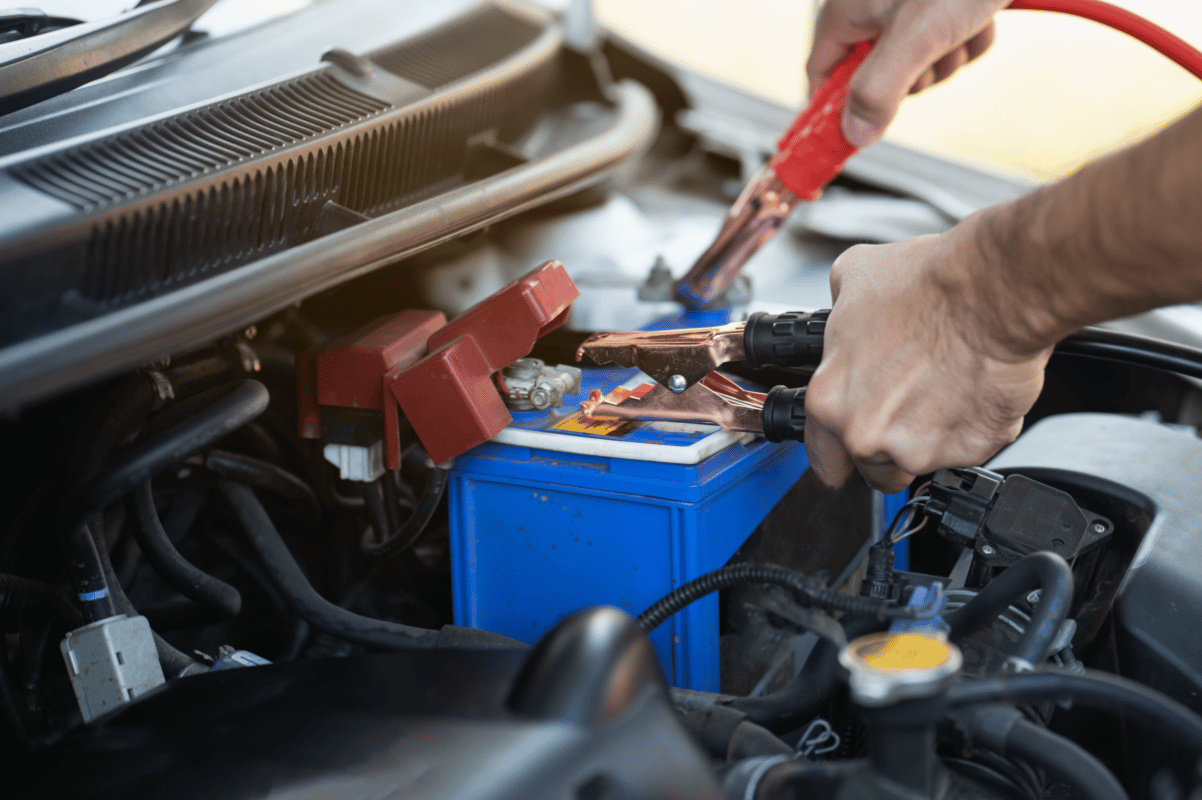
A weak battery often gives little warning until a cold morning, when the engine turns slowly, the dashboard flickers, or nothing happens at all. Good winter battery care is not just about avoiding inconvenience. It can prevent you from becoming stranded in a parking lot, driveway, or unsafe roadside location.
To protect your car battery during a Halifax winter, have it tested before cold weather, keep its terminals clean and secure, limit repeated short trips, use a compatible smart maintainer when the vehicle sits, and replace a weak battery before it fails. If the engine clicks or cranks slowly, stop repeated attempts and arrange a battery boost.
Why Do Car Batteries Fail More Often in Cold Weather?
Cold temperatures slow the chemical reactions that allow a conventional starting battery to deliver power. At the same time, the engine may need more energy to start. A battery that worked normally in mild weather can therefore struggle during the first major temperature drop.
The problem is often made worse by:
- Frequent short drives that do not replace all the energy used during startup
- Heated seats, fans, defrosters, lights, and other electrical loads
- A vehicle sitting unused for several days
- Loose or corroded battery connections
- A weak alternator or another charging-system problem
- A battery that is already near the end of its useful life
Battery manufacturers also warn that a partially charged, ageing battery is more likely to struggle in cold conditions. Short trips may not give the charging system enough time to restore the energy used to start the vehicle.
Which Car Battery Care Tips Matter Most in Halifax Winters?
1. Have the Battery Tested Before It Gives You Trouble
A proper battery test measures more than voltage. It checks whether the battery can still supply enough current to start the engine under load.
Arrange a test before winter when:
- The battery’s age is unknown
- The engine has begun cranking more slowly
- The vehicle recently needed a boost
- Headlights or interior lights dim during startup
- The vehicle sits unused for long periods
A battery may show an acceptable resting voltage but still fail under the heavy demand of an engine start. That is why a load or conductance test provides more useful information than a quick voltage reading alone.
2. Check the Terminals and Connections
Corrosion, dirt, and loose cable connections can restrict the flow of electricity between the battery and the vehicle. The result can look like a dead battery even when the battery still holds a charge.
Look for powdery buildup, damaged cables, loose clamps, or moisture around the battery. If you are not comfortable inspecting or cleaning the connections, have a qualified technician do it. Do not attempt to boost a battery that is cracked, swollen, leaking, or producing a strong unusual smell.
3. Do Not Rely on Repeated Short Trips
Starting the engine uses a significant burst of battery power. A brief trip to a nearby shop may not replace everything used during startup, especially when the heater, rear defroster, headlights, and heated seats are operating.
Combining several errands into one longer trip can help a healthy charging system replenish the battery. However, you should not drive solely to charge a weak battery when road conditions are poor. A compatible smart charger is often a more reliable option for a vehicle that is used infrequently.
4. Use a Compatible Battery Maintainer When the Vehicle Sits
A smart maintainer can help keep a battery charged when a car is parked for an extended period. Unlike a basic charger that supplies power continuously, a proper maintainer monitors the battery and adjusts its output.
Confirm that the charger is compatible with your battery type. Modern vehicles may use conventional flooded batteries, AGM batteries, EFB batteries, or another design. Follow both the charger instructions and the vehicle manufacturer’s guidance.
Do not use damaged cords, makeshift connections, or a charger that is not intended for the battery in your vehicle.
5. Reduce Electrical Load Before Starting
Before turning the key or pressing the start button, switch off unnecessary accessories when possible. This may include the fan, audio system, heated seats, rear defroster, and other high-draw equipment.
After the engine starts, allow it to run normally before switching those accessories back on. Modern vehicles manage many electrical loads automatically, but reducing avoidable demand can still help when the battery is marginal.
6. Park in a Sheltered Location When Available
A garage or sheltered parking area can reduce the battery’s exposure to the coldest conditions. This is especially useful when the vehicle will sit overnight or remain unused for several days.
Only use a battery blanket or heater if it is approved for the battery and installed according to its instructions. Do not place improvised heating devices near a vehicle battery.
7. Replace the Battery With the Correct Type
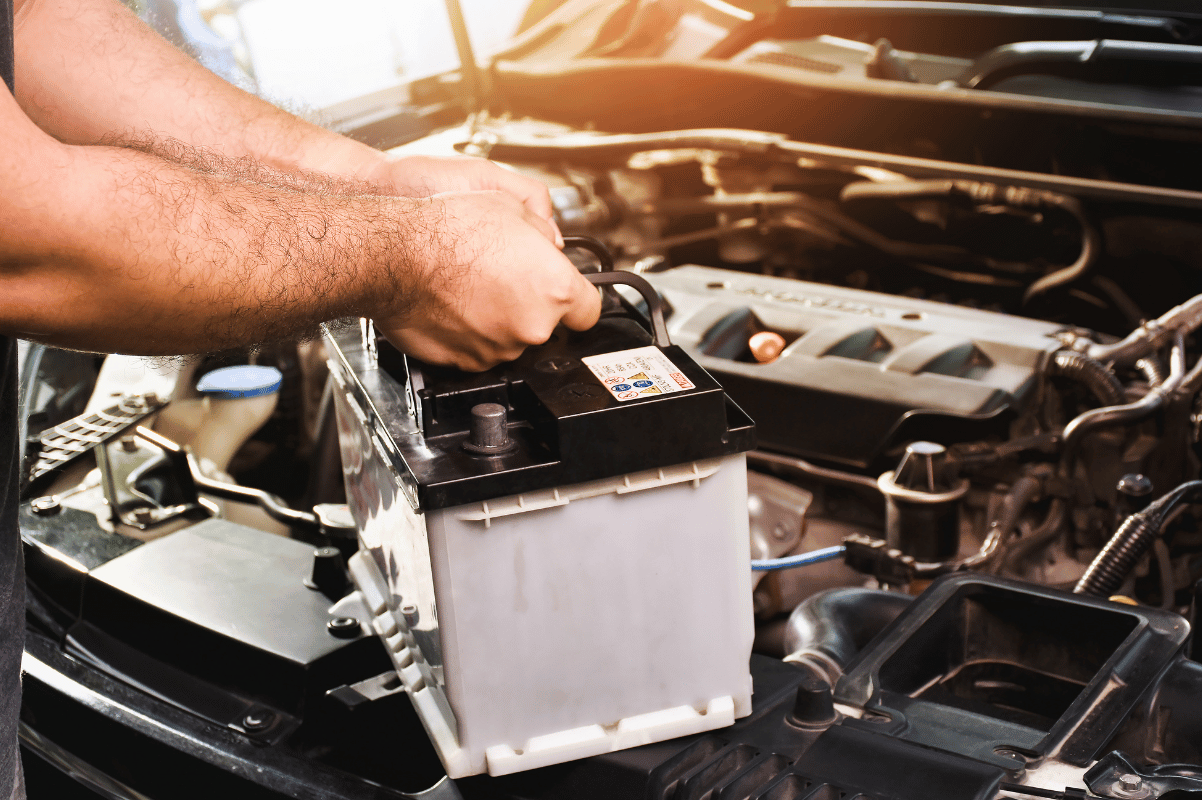
A replacement battery must match the vehicle’s required size, terminal layout, capacity, and cold-cranking specification. Vehicles with automatic start-stop systems often require a specific battery design.
Installing the wrong battery may cause poor starting performance, charging problems, warning lights, or shortened battery life. Check the owner’s manual or ask a qualified battery supplier to confirm the correct specification.
Does Your Car Need a Boost, a New Battery, or a Tow?
The way the vehicle behaves can help you choose the right next step.
| What you notice | What it may mean | Best next step |
| Rapid clicking with little or no engine movement | Battery voltage may be too low | Request a battery boost and have the battery tested |
| Engine turns more slowly than usual | Weak battery, poor connection, or increased cold-start demand | Stop repeated attempts and arrange testing or a boost |
| No dashboard lights or interior power | Fully discharged battery, loose connection, or electrical fault | Check that the vehicle is safely parked, then request roadside assistance |
| One solid click while the lights remain bright | Possible starter, cable, or electrical problem | A boost may not solve it, so towing or diagnosis may be needed |
| Vehicle starts with a boost but soon stops | Possible charging-system problem | Arrange a tow rather than relying on repeated boosts |
| Battery is swollen, cracked, leaking, or has a strong unusual smell | The battery may be damaged | Do not boost or touch it, move away and call for professional help |
| Battery dies again shortly after a successful boost | Weak battery, charging fault, or electrical drain | Have the battery and charging system tested |
| Warning messages appear on a hybrid or electric vehicle | Vehicle-specific low-voltage or system fault | Follow the owner’s manual and request professional assistance |
These signs are useful clues, not a final diagnosis. A battery boost can restore enough power to start a healthy vehicle, but it cannot repair a failing battery, alternator, starter, cable, or electrical system.
When Should You Request a Battery Boost?
A battery boost is usually worth trying when the vehicle is in a safe and accessible location, the battery has no visible damage, and the symptoms point to a discharged 12-volt starting battery.
For example, the interior light may have been left on, the vehicle may have sat unused, or the engine may be cranking slowly after a cold night.
When our team responds to a battery call, the first priority is confirming that the location and vehicle are safe to approach. We can then assess whether a boost is appropriate. If the vehicle does not start or will not remain running, towing may be the safer next step.
When Is Towing Safer Than Another Boost Attempt?
Request a tow when:
- The vehicle is stopped in an unsafe traffic location
- The battery appears physically damaged
- A correct boost attempt has already failed
- The engine starts but stops again
- The charging-system warning light remains on
- The vehicle was involved in a collision
- Steering, braking, wheels, or suspension may be damaged
- The manufacturer advises against a standard boost procedure
- You cannot safely identify the approved boost points
Repeatedly trying to start a vehicle will continue draining the battery and may place extra strain on the starting system. Once the engine has failed to start after a reasonable attempt, it is better to diagnose the problem than to keep turning the key.
What Should You Do If the Battery Dies on Highway 102?
Imagine the engine will not restart after you pull into a safe area near an exit on Highway 102. It is cold, visibility is getting worse, and the shoulder has limited space.
Move the vehicle as far from active traffic as safely possible and turn on the hazard lights if they work. Tell the towing dispatcher your direction of travel, nearest exit, visible road signs, vehicle description, and whether you are fully off the roadway.
If the vehicle is in an active lane or you are in immediate danger, contact emergency services. Do not stand beside moving traffic or attempt repairs in an exposed location.
Nova Scotia 511 provides current highway conditions, traffic information, incidents, and visibility reports. Checking it before a winter trip can help you avoid a route with poor conditions.
What If Your Battery Dies in a Parking Garage?
A dead battery in an underground or multilevel garage presents a different problem. The location may have low clearance, narrow turns, restricted access, or no room for a standard tow truck.
When calling, provide:
- The garage name and street address
- Your floor or parking level
- The entrance clearance
- Your parking-space number
- Whether the vehicle is in Park and can be shifted
- Whether another vehicle can reach the battery safely
- The vehicle’s year, make, and model
This information helps the roadside team determine what equipment and access approach may be suitable before arriving.
What Should Be in a Winter Roadside Kit?
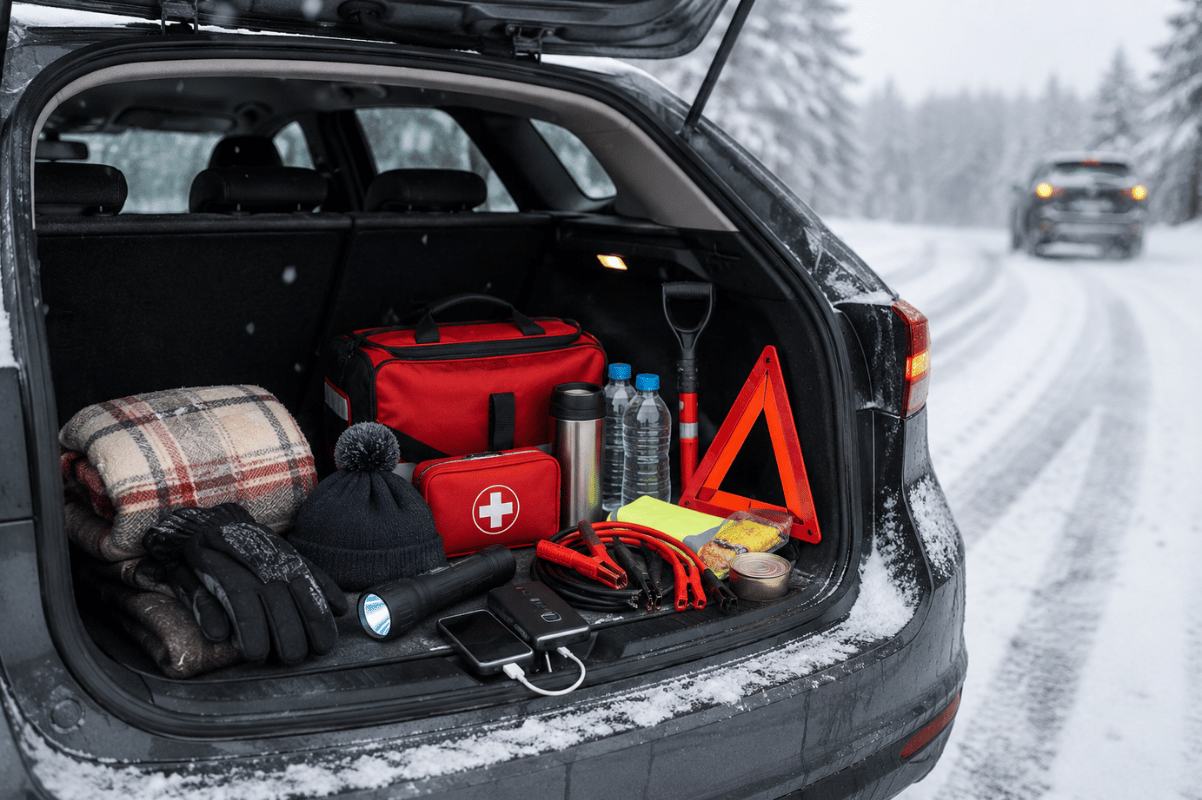
Transport Canada recommends carrying winter supplies that can help during a breakdown or delay. Its emergency-kit guidance includes booster cables, traction aids, a shovel, a flashlight, a reflective vest, an ice scraper, and first-aid supplies.
A practical kit can also include warm clothing, gloves, a phone charging cable, a portable power bank, bottled water, and any essential medication. Check the kit at the beginning of each winter and replace expired or damaged items.
Do not assume that having booster cables means every battery can be safely boosted. Vehicle procedures vary. Always follow the owner’s manual or call roadside assistance when you are unsure.
What Information Should You Give the Towing Dispatcher?
Providing accurate details can reduce delays and help the driver arrive prepared. Tell the dispatcher:
- Your exact location and direction of travel
- The vehicle’s year, make, model, and colour
- What happens when you try to start it
- Whether warning lights are visible
- Whether the vehicle is in a garage, driveway, parking lot, or roadside location
- Whether the battery is damaged or leaking
- Whether you have already tried a boost
- How many passengers are with you
- Whether the vehicle needs towing if it cannot be started
Get 24/7 Battery Boost and Roadside Assistance
A dead battery does not always mean you need a tow. It does mean you need to identify the problem safely and avoid repeated start attempts that may leave the battery completely drained.
Halifax Towing Service – NST provides 24/7 battery boosts, roadside assistance, emergency towing, flatbed towing, tire changes, fuel delivery, and long-distance towing in Halifax, NS and surrounding areas.
Call +1 902-989-4848 for help or to request a quote. Share your exact location and vehicle details so our team can determine whether you are likely to need a boost, roadside service, or towing.
Frequently Asked Questions
How do I keep my car battery from dying in cold weather?
Keep the battery fully charged, have it tested before winter, maintain clean and secure connections, and avoid relying only on short trips. Use a compatible smart maintainer when the vehicle will sit unused.
How can I tell whether my battery is weak?
Common warning signs include slow cranking, rapid clicking, dim lights during startup, intermittent electrical power, and the need for repeated boosts. A professional battery test is the best way to confirm its condition.
Should I keep driving after receiving a battery boost?
Only continue driving if the vehicle is operating normally and there are no charging-system warnings. If it stalls, runs poorly, or displays a battery or charging warning, pull over safely and arrange towing.
How long should I drive after a battery boost?
There is no single driving time that works for every battery and vehicle. A deeply discharged battery may not recharge properly through normal driving, and an alternator is not a substitute for a controlled battery charger. Have the battery tested as soon as practical.
Can a hybrid or electric vehicle receive a battery boost?
Procedures vary by manufacturer and model. Many have specific approved connection points and restrictions, so check the owner’s manual rather than assuming the process is the same as a conventional vehicle. Tell the roadside provider that the vehicle is a hybrid or EV when you call.
How much does a battery boost cost?
The cost can depend on your location, vehicle type, access conditions, and whether additional roadside work is required. Call Halifax Towing Service at +1 902-989-4848 for a quote based on your situation.