
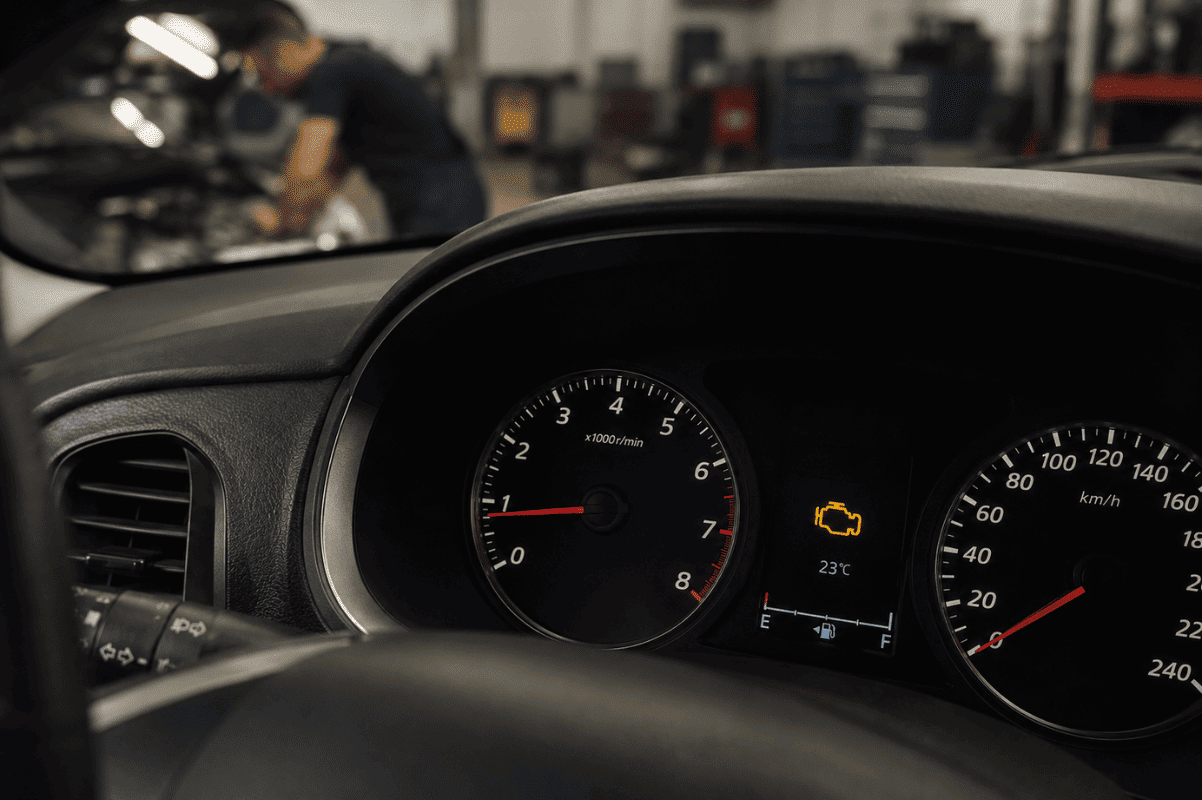
A check engine light can appear when your car seems completely normal, which makes one question urgent: how long can you drive with the check engine light on? There is no universal safe mileage. If the light is steady and the vehicle feels normal, a short, direct drive to a repair shop may be reasonable. If the light is flashing, or the car is shaking, losing power, overheating, smoking, or giving off a strong fuel or burning smell, stop driving as soon as you can safely do so and arrange a tow.
For drivers in Halifax, NS, the safest choice depends more on the light’s behaviour and the way the vehicle is running than on a fixed number of kilometres.
How Long is it Safe to Continue Driving
A steady check engine light with no other symptoms may allow you to drive a short distance for diagnosis. A flashing check engine light should be treated as urgent. Do not use a fixed rule such as 50, 100, or 200 miles to decide whether the car is safe.
AAA advises that a solid check engine light should be addressed promptly, while a flashing light can indicate a more serious problem such as an engine misfire. If the vehicle is shaking, losing power, producing unusual smells, or behaving abnormally, the safer action is to pull over and seek roadside help.
| What you see | What to do |
| Steady check engine light, car runs normally | Drive only as far as needed to reach a safe place or repair facility, then have the fault diagnosed soon |
| Flashing check engine light | Pull over safely, shut the engine off, and arrange towing |
| Check engine light plus shaking, loss of power, smoke, overheating, or strong odour | Stop driving and have the vehicle towed |
| Check engine light plus a red oil-pressure or temperature warning | Treat the red warning as urgent and stop as soon as it is safe |
The key point is simple. Distance is not the best safety test. Vehicle behaviour is.
Why a Fixed 50 to 100 Mile Rule Can Be Misleading
Some search results suggest that it is safe to drive 50 to 100 miles with a check engine light on. That advice is too broad.
The check engine light, also called the malfunction indicator lamp, can be triggered by many different faults. One vehicle may have a loose fuel cap. Another may have an ignition misfire that can damage the catalytic converter. Both vehicles can show the same dashboard symbol.
That is why there is no reliable mileage limit that applies to every check engine light. A car that is running normally with a steady light may be able to reach a nearby mechanic without trouble. A car with a flashing light and severe shaking should not be driven another 50 miles just because it falls within a suggested mileage range.
When you do not know the cause, use the warning pattern and symptoms to decide your next step.
Solid vs. Flashing Check Engine Light
A Solid Check Engine Light
A solid light generally means the vehicle’s computer has detected a fault that needs attention. The cause can range from an emissions-system problem to an ignition, air-fuel, or sensor issue.
If the car starts normally, idles smoothly, accelerates normally, and has no other warning lights or unusual smells, you may be able to drive a short distance to a repair facility. Avoid unnecessary trips until the problem has been diagnosed.
“Short distance” does not mean you have a guaranteed number of safe kilometres. It means limiting driving to what is reasonably necessary.
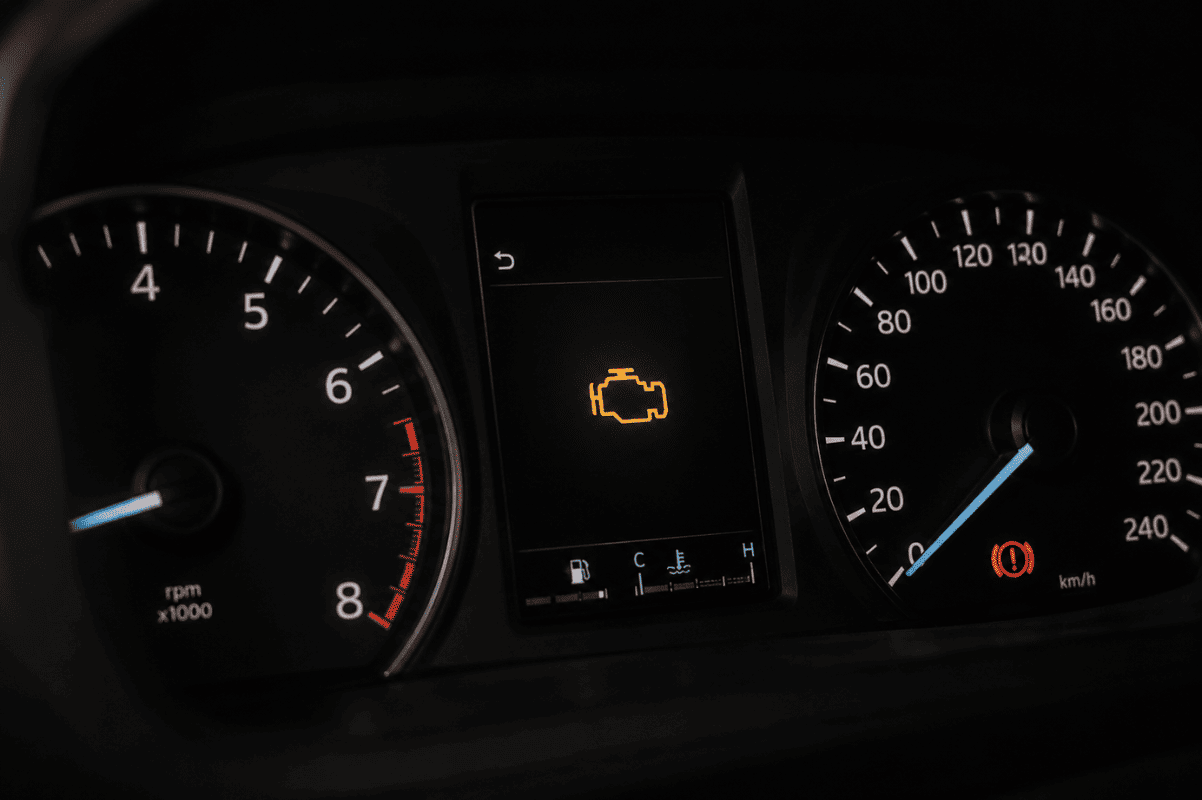
A Flashing Check Engine Light
A flashing light is much more serious. It often points to an active misfire or another fault that can cause rapid damage. AAA specifically warns that a flashing check engine light may indicate an ignition malfunction or misfire, and continued driving can put the catalytic converter and other components at risk.
If the light starts flashing while you are driving, reduce speed, avoid hard acceleration, and get to the nearest safe stopping place. If the car is shaking, losing power, or running roughly, shut it off and arrange a tow.
If a flashing light later becomes steady, do not assume the danger has passed. The fault may have become intermittent. The vehicle still needs prompt diagnosis, especially if the flashing returns.
When Should You Stop Driving Immediately?
The check engine light is only one part of the decision. What the vehicle does next matters just as much.
Stop driving if the check engine light is flashing or if it appears with severe shaking, repeated stalling, major loss of power, visible smoke, a strong fuel smell, a burning smell, overheating, or a red oil-pressure warning. AAA also recommends pulling over when a check engine light is accompanied by abnormal performance such as shaking or loss of power.
A useful real-life example is a car that begins shaking while climbing a hill and then shows a flashing check engine light. That combination can point to an active misfire. Trying to finish a long trip could increase the repair bill. Getting the vehicle towed to a repair shop is the safer choice.
Another example is a steady light after filling the fuel tank. If the car feels completely normal, checking whether the fuel cap is properly tightened is reasonable. You should still arrange diagnosis if the light stays on.
What Are the Most Common Causes of a Check Engine Light?
The warning does not identify one specific part. It tells you that the onboard diagnostic system has detected a problem.
Common causes include a loose or damaged fuel cap, an oxygen sensor fault, worn spark plugs, a failing ignition coil, a mass airflow sensor problem, an evaporative-emissions leak, or a catalytic converter issue. AAA notes that a check engine light can range from a simple fuel-cap problem to engine or exhaust faults.
Some of these problems can affect fuel economy or emissions before you notice a major change in how the vehicle drives. Others can quickly lead to rough running or a breakdown.
This is also why replacing a part based only on an OBD-II code can be a mistake. A trouble code points technicians toward a system or condition. It does not always prove that the named component itself has failed.
What Should You Do When the Check Engine Light Comes On?
- Look at the light. Check whether it is steady or flashing.
- Pay attention to the car. Notice shaking, reduced power, rough idle, unusual noises, smoke, smells, overheating, or other warning lights.
- Check the fuel cap if the vehicle is running normally. Make sure it is installed correctly and tightened as your vehicle manufacturer recommends.
- Limit unnecessary driving. A steady light still deserves prompt diagnosis even when the car seems normal.
- Call for towing when the symptoms are serious. A flashing light, severe shaking, major power loss, overheating, smoke, or a red oil-pressure warning are strong reasons not to keep driving.
If you are stopped beside a busy road, personal safety comes first. Move to a safer location only when the vehicle can be moved without creating greater risk, switch on the hazard lights, and stay clear of moving traffic while arranging assistance.
Should You Use an OBD-II Scanner?
An OBD-II scanner can be useful because it reads diagnostic trouble codes stored by the vehicle’s computer. It can tell you which system detected a fault and can help a technician narrow down the problem.
It should not be treated as a complete diagnosis. AAA notes that diagnostic codes provide important clues, but trained repair professionals still need to identify the actual cause before parts are replaced.
Avoid clearing codes or disconnecting the battery just to make the warning light disappear before the problem is checked. Resetting the OBD system can also reset readiness information, which means some self-tests have to run again.
Most importantly, turning the light off does not repair the fault that turned it on.
Can a Check Engine Light Affect Your Nova Scotia Vehicle Inspection?
Do not rely on advice written for another province or for a US state. Inspection rules are not identical everywhere.
Nova Scotia’s official passenger and light commercial vehicle inspection manual requires model-year 1991 and newer vehicles to receive a visual inspection of emission-control hardware and related components. The manual specifically includes the catalytic converter and emission-control equipment.
That does not mean every illuminated check engine light automatically has the same inspection outcome. It does mean that damaged, missing, disconnected, or modified emissions equipment can matter during a provincial inspection. If the light is on, diagnosing the cause before inspection is a sensible approach.
When Is Towing Safer Than Driving to the Mechanic?
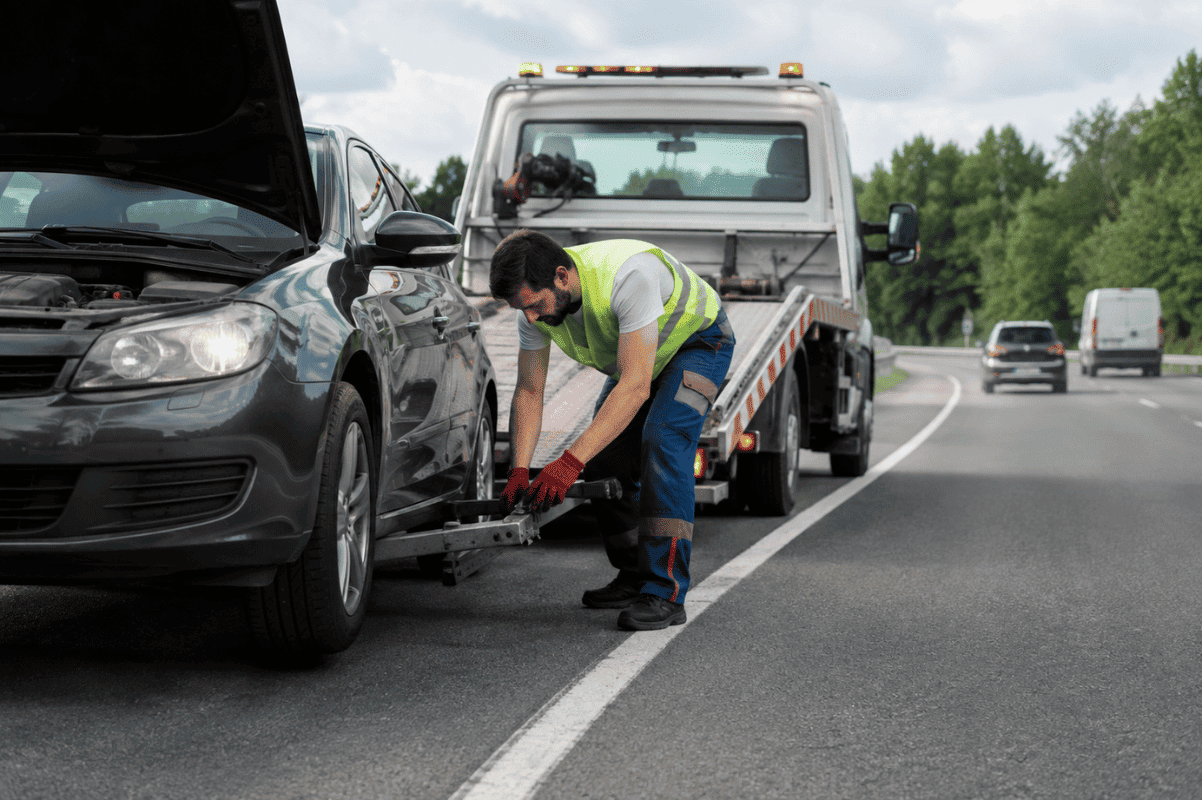
A tow is the safer choice when driving could worsen the fault or leave you stranded in traffic.
For example, imagine you are heading home and the engine begins shaking, acceleration becomes weak, and the check engine light starts flashing. Even if the nearest shop is only several kilometres away, those symptoms make towing more sensible than testing how far the vehicle can go.
Halifax Towing Service – NST provides 24/7 emergency towing and roadside assistance for drivers who cannot safely continue. The goal is not to tow every car with a steady warning light. It is to help when the vehicle’s condition makes continued driving unsafe or uncertain.
If your vehicle cannot be driven safely, call +1 902-989-4848 for towing assistance.
Can Driving With the Check Engine Light On Cause More Damage?
Yes, depending on the fault.
A failed sensor may mainly affect fuel mixture, emissions, or fuel economy at first. An ignition misfire can send unburned fuel into the exhaust, creating excessive heat that may damage the catalytic converter. Other faults can lead to poor running, stalling, or a roadside breakdown.
This is why “the car still runs fine” is useful information, but it is not a diagnosis. A steady light gives you a reason to arrange service soon, not permission to ignore the warning for weeks.
Frequently Asked Questions
Can I Still Drive If My Engine Light Is On?
If the check engine light is steady and the car is running normally, a short drive to a repair facility may be reasonable. If the light is flashing or the vehicle is shaking, losing power, smoking, overheating, or smelling strongly of fuel, stop driving and seek assistance.
Can I Drive Four Hours With a Check Engine Light On?
A four-hour drive is not a good plan unless the cause has been diagnosed and a qualified repair professional has confirmed the vehicle is safe to operate. A steady light can still represent a fault that may worsen during a long trip.
How Many Miles Can I Drive With the Check Engine Light On?
There is no universal safe mileage. Do not rely on a 50, 100, or 200 mile rule. A steady light with normal performance may allow a short trip for diagnosis, while a flashing light or serious symptoms can mean you should stop immediately.
Can I Drive 200 Miles With the Check Engine Light On?
It is better not to plan a 200-mile trip with an unexplained check engine light. Have the code and underlying problem checked first. If the light is flashing, do not make the trip.
Why Is My Check Engine Light On If the Car Runs Fine?
Some faults affect emissions or sensor readings before they create obvious driving symptoms. A loose fuel cap, oxygen sensor issue, or small evaporative-system leak can trigger the light even when the car feels normal. The fault should still be diagnosed.
Can I Drive With the Check Engine Light On If My Car Is Shaking?
No. Shaking with a check engine light can indicate an active misfire or another serious engine problem. If the light is flashing or the shaking is severe, pull over safely and arrange a tow rather than continuing to drive.
Need a Tow Because the Check Engine Light Is Flashing?
If your vehicle is shaking, losing power, overheating, or showing a flashing check engine light, forcing it to continue can turn a warning into a breakdown.
Halifax Towing Service – NST is available 24/7 for emergency towing and roadside assistance in Halifax, NS and surrounding areas. We focus on safe vehicle handling, professional service, fast response, and fair pricing.
Address: 301 Lacewood Dr, Halifax, NS B3M 4L1, Canada
Phone: +1 902-989-4848
Availability: 24/7
If you are unsure whether your vehicle is safe to drive, choose the option that reduces the risk of further damage and gets you and your vehicle off the road safely.