

Many vehicle owners in Halifax wonder what actually happens after a junk car leaves their driveway. Once the tow truck pulls away, the process is far more organized than most people realize. A vehicle does not simply disappear into a scrapyard. It goes through several steps that recover valuable materials, protect the environment, and safely dispose of anything that cannot be reused.
After years of working in the towing and vehicle removal industry around Halifax, one thing becomes clear. Every vehicle has value, even when it no longer runs. Whether it has been damaged in a collision, failed an inspection, or simply reached the end of its life after years of Nova Scotia winters, most of its materials can still serve a purpose.
Why So Many Cars Reach the End of Their Life in Halifax
Driving conditions in Halifax can be hard on vehicles. Winter road salt helps keep roads safer, but it also speeds up rust on frames, brake lines, suspension parts, and body panels. Moisture from coastal weather adds even more wear over time.
Many vehicles also spend years travelling Highway 102 between Halifax and Halifax Stanfield International Airport or making daily trips through Bedford, Dartmouth, Sackville, and Burnside. Frequent stop-and-go driving, changing weather, and rough winter conditions all contribute to mechanical wear. Since Nova Scotia has relatively short driving seasons without winter hazards, many older vehicles eventually become too expensive to repair.
When repair costs begin to exceed the value of the vehicle, many owners decide it is time to move on.
The Vehicle Is Picked Up
The first step is arranging removal.
A professional towing company schedules a pickup at the owner’s home, workplace, repair shop, or wherever the vehicle is located. Before loading the vehicle, ownership documents are verified to ensure everything is transferred legally.
If the vehicle cannot start or has locked wheels, specialized towing equipment is used to load it safely without causing damage to surrounding property.
For anyone searching for cash for junk cars, it is important to work with a licensed local company that explains the process clearly and provides proper documentation.
Fluids Are Removed Safely
Once the vehicle reaches the processing yard, one of the first jobs is draining all automotive fluids.
This includes engine oil, coolant, brake fluid, transmission fluid, power steering fluid, fuel, and windshield washer fluid.

Proper removal is important because these liquids should never leak into soil or waterways. Licensed recycling facilities follow provincial and environmental regulations for handling hazardous automotive fluids.
Most of these fluids are collected separately and either recycled or disposed of through approved waste management systems.
Reusable Parts Are Inspected
Not every part on a junk vehicle is actually junk.
Experienced technicians inspect components that may still have useful life left. Depending on the condition of the vehicle, reusable items can include:
- Engines
- Transmissions
- Alternators
- Starters
- Wheels
- Tires
- Doors
- Mirrors
- Seats
- Radiators
- Headlights
- Electronic modules
Many replacement parts help keep older vehicles on Nova Scotia roads while reducing waste.
Vehicles damaged in one area often have many perfectly usable parts elsewhere.
Catalytic Converters Receive Special Attention
One of the most valuable parts on many older vehicles is the catalytic converter.
Catalytic converters contain small amounts of precious metals including platinum, palladium, and rhodium. These materials are recovered through specialized recycling facilities rather than being thrown away.
Because catalytic converters have become valuable, owners should always deal with a reputable towing and vehicle removal company that properly documents the transaction.
Batteries Are Recycled
Vehicle batteries contain lead and acid that require careful handling.
Fortunately, automotive batteries are among the most recycled consumer products in North America. Most of the lead, plastic, and other materials can be recovered and used to manufacture new batteries.
This keeps hazardous materials out of landfills while reducing demand for newly mined raw materials.
Tires Are Given New Uses
Old tires rarely go directly into the garbage.
Depending on their condition, they may be retreaded, recycled into rubber products, or processed for industrial applications.
Across Canada, tire recycling programs help reduce waste while creating materials used in construction, landscaping, playground surfaces, and other products.
The Metal Is Crushed and Recycled
After valuable parts and hazardous materials have been removed, the remaining vehicle shell is prepared for recycling.
Large industrial equipment crushes the vehicle before sending it to metal shredders.
Powerful magnets separate steel from other materials. Additional equipment separates aluminum, copper, and other metals.
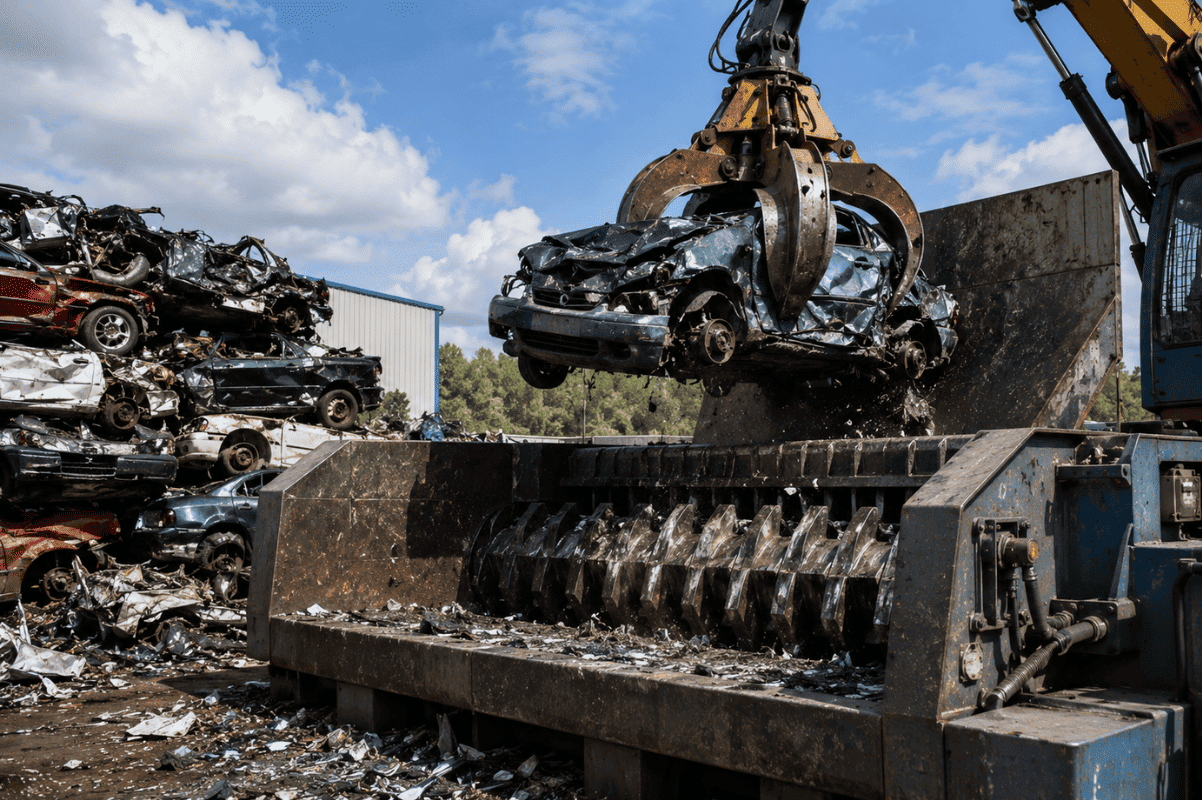
Steel from old vehicles becomes raw material for manufacturing countless products, including new vehicles, construction materials, appliances, and machinery.
Since steel can be recycled repeatedly without losing its strength, scrapping vehicles helps conserve natural resources.
Plastic, Glass, and Other Materials
Modern vehicles contain much more than metal.
Plastic bumpers, dashboards, trim pieces, glass windows, wiring insulation, and various interior materials are separated whenever practical.
While not every material can currently be recycled economically, recycling technology continues to improve each year. More components are being recovered than ever before.
What Happens to Total Loss Vehicles?
Insurance companies often declare vehicles a total loss after serious collisions.
That does not necessarily mean every part is destroyed.
Many totalled vehicles still contain valuable mechanical components, body parts, wheels, electronics, and interior pieces that remain in excellent condition.
After approved inspections and processing, usable components may continue serving drivers throughout Nova Scotia for years.
Environmental Benefits of Scrapping a Vehicle
Many Halifax residents are surprised by how environmentally responsible modern vehicle recycling has become.
Recycling one vehicle helps reduce demand for newly mined metals. Recovering reusable parts lowers manufacturing needs. Proper disposal of hazardous fluids protects groundwater and local ecosystems.
This is especially important near coastal communities where protecting the environment remains a priority.
Instead of allowing an abandoned vehicle to slowly leak fluids or rust away, proper recycling gives nearly every major component another purpose.
Preparing Your Vehicle Before Pickup
Owners can make the removal process much easier with a little preparation.
Remove all personal belongings before the scheduled pickup. Check the glove compartment, centre console, trunk, under seats, and storage pockets. Many people forget sunglasses, garage door openers, paperwork, or small electronics.
If possible, remove your licence plates according to Nova Scotia registration requirements and have your ownership documents available.
If the battery is dead or the tires are flat, there is usually no need to worry. Professional towing equipment is designed to handle vehicles in almost any condition.
Whether the vehicle is sitting in a driveway in Clayton Park, parked behind a business in Burnside, or stranded outside Goodwood, experienced operators have likely dealt with similar situations many times before.
When transportation assistance is needed for another vehicle, reliable <a href=”https://halifaxtowingservices.ca/”>towing service Halifax</a> is available throughout Halifax Regional Municipality and surrounding communities.
Every Junk Vehicle Still Has Value
Many owners assume an old vehicle has no remaining worth because it no longer runs.
That is rarely true.
Its engine may still contain reusable components. The transmission could be rebuilt. The wheels might fit another vehicle. Even damaged vehicles usually contain recyclable metals that retain value.
Every vehicle is different, which is why professional inspections help determine what can be recovered before final recycling begins.
Ready to Remove Your Junk Car?
If an unwanted vehicle is taking up space in your driveway, garage, or parking lot, there is no reason to let it continue deteriorating through another Halifax winter.
Halifax Towing Service NST provides professional junk vehicle removal throughout Halifax, Dartmouth, Bedford, Sackville, Clayton Park, Cole Harbour, Burnside, Goodwood, and nearby Nova Scotia communities. Whether your vehicle has been damaged, stopped running, or simply reached the end of its useful life, the team can arrange prompt pickup and responsible recycling.
Call Halifax Towing Service NST today at (902) 989-4848 learn more about the junk car removal process.