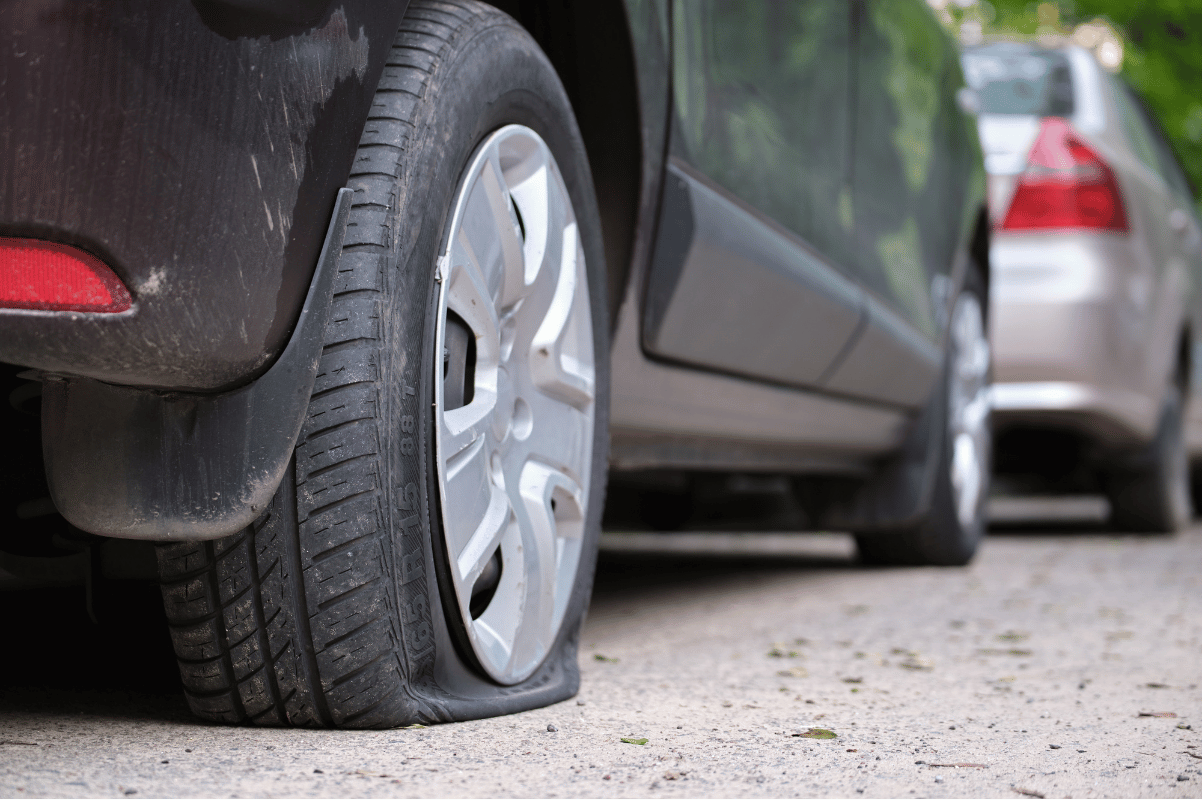
A flat tire at highway speed can make your vehicle pull, vibrate, or feel difficult to control. Knowing what to do with a flat tire on the highway helps protect you, your passengers, and other drivers while limiting avoidable damage.
Hold the steering wheel firmly, ease off the accelerator, turn on your hazard lights, and move toward a safe exit or the widest available shoulder. Do not brake hard or stop in a travel lane. Once parked safely, stay away from moving traffic and call roadside assistance unless the location is clearly safe for a tire change.
The safest choice is not always to change the tire yourself. On a narrow shoulder, near a curve, in poor visibility, or beside fast traffic, request professional help. Halifax Towing Service – NST provides 24/7 roadside assistance and towing in Halifax, NS, and surrounding areas at +1 902-989-4848.
What Should You Do With a Flat Tire on the Highway?
Your first goal is to keep the vehicle stable and leave the traffic lane. A sudden blowout may feel severe, but sharp steering or hard braking can make the vehicle harder to control.
Take these steps:
- Keep both hands on the steering wheel.
- Take your foot off the accelerator and slow down gradually.
- Turn on the hazard lights.
- Check your mirrors and signal before changing lanes.
- Aim for an exit, parking lot, rest area, or wide, level shoulder.
- Stop as far from moving traffic as reasonably possible.
- Apply the parking brake and keep the hazards on.
- Call 911 if the vehicle blocks a lane, anyone is injured, there has been a collision, or the position is immediately dangerous.
- Call roadside assistance or a towing company once the immediate danger is under control.
Do not focus on saving the tire while the vehicle is moving. Reaching a safer position matters more than avoiding the cost of a tire or wheel.
Should You Brake During a Tire Blowout?
Avoid slamming on the brakes. A damaged tire reduces traction and changes how the vehicle responds. Hard braking can cause a sudden weight shift and make it more difficult to keep the vehicle straight.
Hold the wheel steady and ease off the gas. As speed drops, steer smoothly toward a safer stopping place. Use the brakes gently only when the vehicle is under control and you are ready to stop.
A slow leak may give you more warning. Common signs include a tire-pressure warning, rhythmic thumping, heavier steering, vibration, or the vehicle pulling to one side. Treat these signs as a reason to leave the highway, not as permission to continue to your destination.
Is the Highway Shoulder Safe Enough to Change a Tire?
A shoulder is safer than a live lane, but it is not automatically safe enough for a tire change. Before opening the door or unloading tools, look at traffic speed, road surface, visibility, and the space around the vehicle.
| Situation | Best next step | Why |
| You reached a level area well away from traffic, have a usable spare and tools, and know the correct lifting points | Consider changing the tire | The vehicle can be stabilized away from moving traffic |
| You are on a narrow shoulder, near a curve or hill, beside a guardrail, or close to fast traffic | Call roadside assistance | There may not be enough room to work safely |
| It is dark, icy, snow-covered, raining heavily, or visibility is poor | Call for professional help | Drivers may see you late and the jack may not be stable |
| You have no usable spare, no jack, or no wheel-lock key | Request roadside assistance or towing | A roadside tire change may not be possible |
| The tire is shredded, the wheel is bent, or steering or suspension damage is possible | Request a tow | Moving the vehicle could cause more damage |
| The vehicle has run-flat tires | Check the owner’s manual and call for guidance | Distance and speed limits vary |
If you are close to traffic, do not stand beside the damaged wheel, behind the vehicle, or between the vehicle and a barrier. Whether it is safer to remain buckled inside or move to a protected location depends on the scene.
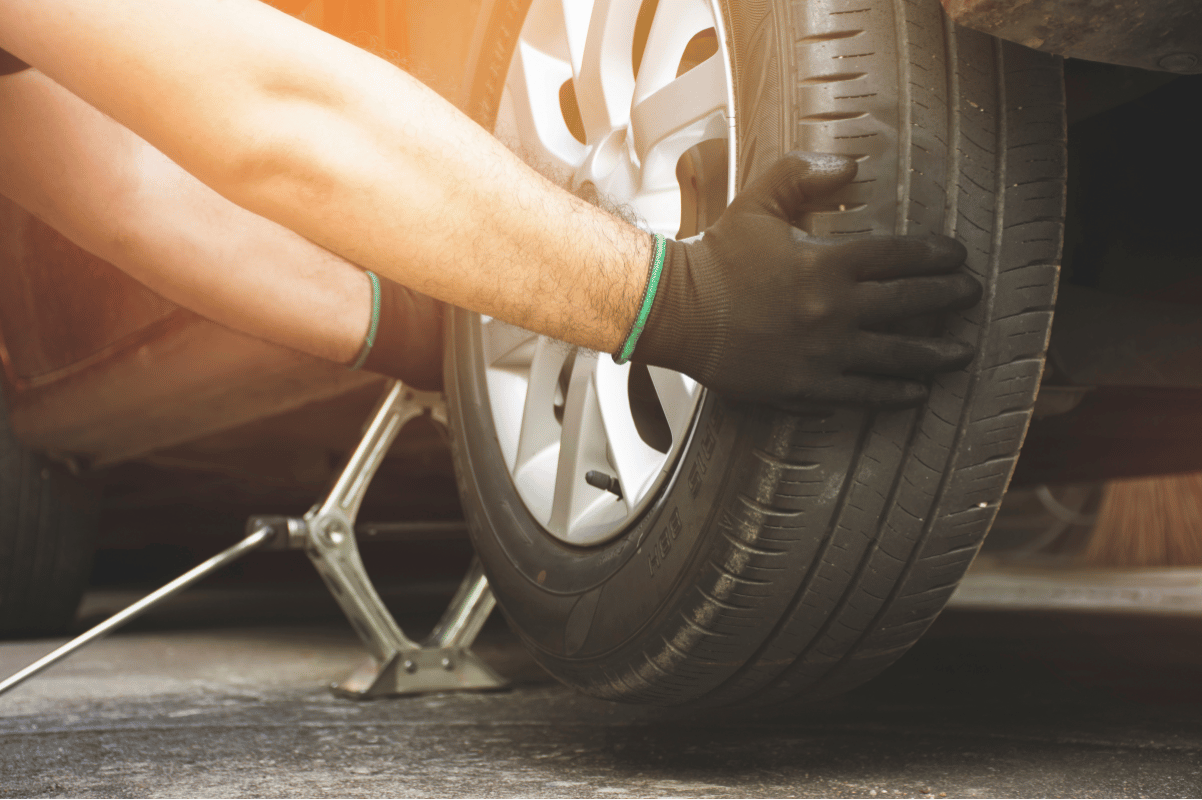
Should You Stay Inside the Car While Waiting?
Stay buckled inside when leaving the vehicle would place you closer to fast traffic and the car is fully outside the travel lane. Keep the doors locked and hazard lights on.
Remaining inside may not be safe if part of the vehicle is exposed to traffic, there is smoke, fire, leaking fuel, or a high risk of another collision. Call 911 and follow the operator’s instructions. Never cross active highway lanes.
Nova Scotia’s 511 service provides current road conditions, traffic events, cameras, and visibility information, but it is not an emergency dispatch service. Its official FAQ directs drivers to call 911 for an emergency.
When Should You Call Roadside Assistance?
If you are unsure about handling the situation yourself, you can book professional flat tire change services in Halifax to ensure your vehicle is handled safely.
Call for help whenever the location, weather, equipment, or your experience makes a tire change uncertain. The highway shoulder is not the place to learn how to use a jack.
Professional help is the better choice when traffic is close, the ground is soft or sloped, the spare is missing or flat, the lug nuts will not move, or you cannot identify the correct jack point. It is also reasonable to call when lifting, kneeling, or working beside the road would be difficult.
When our team responds, the first decision is whether the vehicle can be made mobile safely at the roadside. If a usable spare can be installed in a protected location, a tire change may solve the immediate problem. If the wheel, steering, suspension, or another part appears damaged, towing is usually the safer option.
When Does a Flat Tire Require a Tow?
A tow is generally needed when the vehicle cannot be driven safely after the tire failure. Common reasons include:
- No usable spare
- More than one damaged tire
- A bent or cracked wheel
- A shredded tire or separated tread
- Possible steering or suspension damage
- A vehicle that sits unusually low after the failure
- Hidden tire damage after driving on it without proper air pressure
A flatbed may be selected when the vehicle should not roll on its wheels or when its design and condition call for that method. The towing operator can choose suitable equipment after confirming the vehicle type, damage, and location.
Do not assume a tire is safe because it holds air again. Driving while deflated can damage the inside of the sidewall even when the outside looks repairable. Have a tire professional inspect it.
Can You Drive on a Flat Tire to Reach an Exit?
Do not continue driving for convenience. When the current position is dangerous, move only as far as needed to leave the live lane or reach a clearly safer stopping point. Keep your speed low, avoid sharp steering, and stop as soon as you are out of immediate danger.
There is no universal safe distance for a standard flat tire. Damage depends on the tire, vehicle load, speed, road surface, and remaining air pressure. Even a short drive can turn a repairable puncture into a ruined tire or damaged wheel.
Run-flat tires are different, but they are not unlimited. Follow the speed and distance instructions in the owner’s manual or tire documentation, then arrange an inspection.
What Information Should You Give the Towing Company?
Clear details help the dispatcher find you and send suitable equipment. Provide:
- Highway number, direction of travel, nearest exit, and a visible landmark
- A phone map pin or GPS coordinates when available
- Vehicle year, make, model, colour, and licence plate
- Which tire is damaged
- Whether you have an inflated spare, jack, and wheel-lock key
- Whether the vehicle is completely outside the traffic lane
- Any visible wheel, steering, body, or suspension damage
- Passenger or mobility concerns
Do not leave the vehicle to search for an exit sign if doing so would bring you near traffic.
[Add Halifax Towing Service’s verified average response time here if available.]
What Happens When You Call Halifax Towing Service?
Call +1 902-989-4848 and describe your location, vehicle, damaged tire, available spare, and traffic exposure. Our team will determine whether roadside tire assistance is practical or towing is the safer choice.
A typical response includes confirming your location and vehicle details, arriving with equipment suited to the call, securing the work area as conditions allow, and either installing the spare or preparing the vehicle for transport.
Pricing can depend on access, vehicle type, required equipment, and towing distance. Ask for a quote based on the details of your situation.
[Add verified roadside tire-change pricing or a starting call-out rate here if available.]
What Should You Do While Waiting for Help?
Keep the hazard lights on and your phone available. Stay alert to changes around the vehicle and keep passengers together.
Do not begin a repair after calling for help if the location remains unsafe. Avoid the traffic-facing side of the vehicle. Do not allow children or pets onto the shoulder.
Nova Scotia’s Slow Down, Move Over rules require passing drivers to slow to 60 km/h, or the posted speed if it is lower, when a stopped tow truck or emergency vehicle has flashing lights. On roads with two or more lanes in the same direction, drivers must also move farther away when it is safe.
A Halifax Highway Scenario
Imagine a driver notices heavy vibration on Highway 102 during a cold evening. The vehicle remains controllable, so the driver holds the wheel steady, lifts off the accelerator, turns on the hazards, and takes the nearest safe exit instead of stopping beside a narrow shoulder.
In a level area, the driver discovers the spare is low on air. Rather than installing an unsafe spare or returning to the highway, the driver calls for help and gives the exit number, direction of travel, vehicle description, and map pin.
The most important decision was not how quickly the tire could be changed. It was choosing a location where the driver, passengers, and roadside operator had room to work.
How Can You Reduce the Risk of Another Highway Flat?
Check tire pressure when the tires are cold and use the pressure listed on the vehicle placard, usually on the driver’s door frame. Inspect the tread and sidewalls for cuts, bulges, cracking, uneven wear, and embedded objects. Check the spare and roadside tools during regular maintenance.
Transport Canada notes that under-inflation combined with summer heat and high speeds can contribute to a blowout. Tire pressure also changes with temperature, so regular checks matter throughout the year.
For seasonal transitions, consider using Halifax tire swap services to ensure your vehicle is equipped with the right tires for the current weather conditions.
Before travelling in poor winter conditions, check 511 Nova Scotia for road conditions, traffic events, cameras, and reduced visibility. Carry a charged phone, warm clothing, a flashlight, reflective gear, and your roadside assistance contact number.

Need Help With a Flat Tire in Halifax?
A highway shoulder is not the place to take chances. Halifax Towing Service provides 24/7 roadside assistance, tire changes, emergency towing, and flatbed towing in Halifax, NS, and surrounding areas.
Call +1 902-989-4848 and share your location, vehicle details, damaged tire, and whether you have a usable spare. Our team will help determine the safest practical next step and provide a quote for the service required.
Frequently Asked Questions
Can I drive one mile on a flat tire?
You should not plan to drive one mile on a standard flat tire. Move only the minimum distance needed to escape an immediate traffic hazard, then stop. Continuing can damage the tire, wheel, and other components.
Should I change a flat tire on the highway shoulder?
Only when the shoulder is wide, level, stable, clearly separated from traffic, and visibility is good. You also need the correct tools, a safe spare, and confidence using the specified jack points. Otherwise, call roadside assistance.
What should I do if I have a flat tire and no spare?
Move to a safe location, turn on the hazard lights, and call a towing or roadside assistance company. Some vehicles carry an inflator kit, but sealant is not suitable for every type of damage. Follow the owner’s manual.
Who should I call for a flat tire on the highway?
Call 911 for a collision, injury, fire, blocked lane, or immediate danger. For a safely stopped vehicle that needs a tire change or tow, call a roadside assistance or towing provider. Halifax Towing Service is available 24/7 at +1 902-989-4848.
What is the difference between a flat tire and a blowout?
A flat tire is a loss of air that may happen slowly or suddenly. A blowout is a rapid failure that often causes a loud sound, strong vibration, and an immediate change in handling. In either case, hold the wheel, ease off the accelerator, and move to safety.
Can I keep driving with a run-flat tire?
Possibly, but only within the limits set by the vehicle and tire manufacturer. Check the owner’s manual for the permitted speed and distance, then arrange an inspection.