
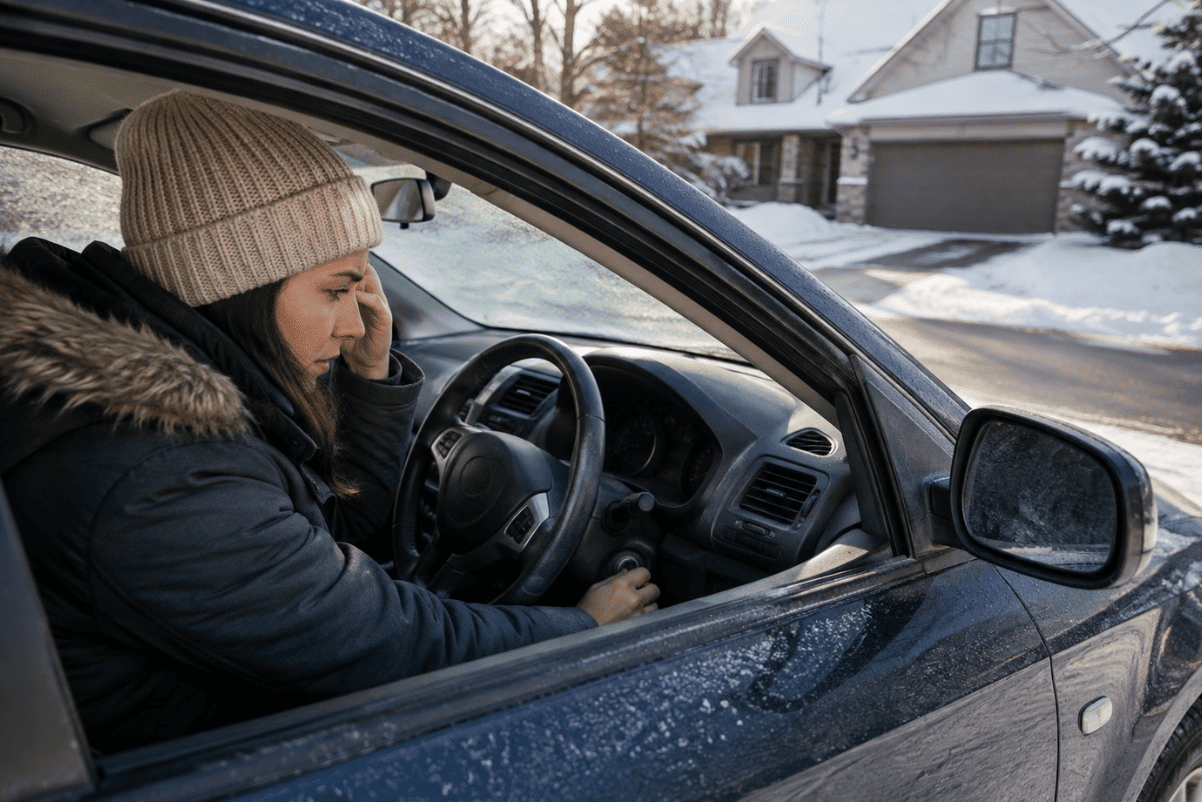
You are ready to leave for work, school, or an appointment. You turn the key or press the start button, but your car does not start. This is frustrating at any time, but it can be especially stressful on a cold morning when you need to get somewhere quickly.
A car that won’t start in cold weather usually has a weak battery. Low temperatures reduce the battery’s starting power while also making the engine harder to turn. Other possible causes include loose battery connections, a worn starting component, or a problem with the fuel or electrical system.
Before deciding what to do, pay attention to the sound the vehicle makes. Clicking, slow cranking, or complete silence can provide useful clues about the problem.
What Should You Do First?
Start by turning off everything that uses electricity, including:
- Heater fan
- Heated seats
- Radio
- Headlights
- Rear window defroster
Once these items are switched off, try to start the car one time. Do not hold the key in the start position or press the start button for longer than about 10 seconds.
If the car does not start, wait around 30 seconds before trying again. This short pause allows the battery and starting system to recover slightly. Stop after three or four attempts. Repeatedly trying to start the vehicle can drain the battery completely and make the situation worse.
The following guide can help you understand what different sounds or symptoms may mean:
| What Happens | What It May Mean | What to Do |
| You hear fast clicking | The battery is weak | Request a battery boost |
| You hear one click | The battery connection or starting system may have a problem | Request roadside assistance |
| The engine turns very slowly | The battery may not have enough power | Try a professional battery boost |
| The engine turns normally but does not start | The problem may not be the battery | Arrange towing or an inspection |
| Nothing happens and no lights come on | The battery may be completely drained | Request a boost |
| The lights work but the engine does not start | The battery may still be weak, or another component may have failed | Request roadside help |
Why Does Cold Weather Stop a Car From Starting?
Cold weather makes several parts of your vehicle work harder at the same time. The battery becomes less powerful, the engine becomes more difficult to turn, and existing mechanical or electrical problems are more likely to become noticeable.
The Battery Loses Starting Power
Your car battery stores the electricity needed to start the engine. In cold temperatures, the chemical reactions inside the battery slow down, which means it cannot provide as much starting power as it can during warmer weather.
This is why a battery that worked normally yesterday may suddenly struggle after a cold night. The cold may not have damaged the battery overnight. Instead, it may have exposed a battery that was already becoming weak.
Cold-weather battery problems are more common when:
- The battery is several years old
- The car is mainly used for short trips
- Lights or other accessories were left on
- The battery has not been fully recharged
- The battery connections are loose or dirty
The dashboard lights may still turn on even when the battery is too weak to start the engine. Lights, radios, and other small accessories use much less power than the starter motor requires.
The Engine Is Harder to Turn
Engine oil helps the moving parts inside the engine operate smoothly. When temperatures drop, the oil becomes thicker and does not flow as easily.
As a result, the battery and starting system must work harder to turn the engine. A battery that is only slightly weak may not have enough power to overcome this added resistance.
Always use the type and grade of engine oil recommended in your vehicle owner’s manual. The correct oil can flow more effectively in cold conditions and make winter starting easier.
Cold Weather Reveals Existing Problems
Cold temperatures do not always create a new vehicle problem. More often, they reveal a battery, cable, sensor, or mechanical part that was already becoming weak.
A car may start normally in mild weather but begin struggling as soon as the temperature drops. Common problem areas include the battery, battery cables, starting system, charging system, fuel system, and certain engine sensors.
Car Won’t Start in the Cold but the Lights Come On
Many drivers assume the battery must be fine because the dashboard lights, radio, or interior lights still work. Unfortunately, that is not always true.
Starting the engine requires much more battery power than operating the lights. A weak battery may have enough electricity to illuminate the dashboard but still be unable to turn the engine.
Pay close attention to what happens when you try to start the vehicle:
- Fast clicking: The battery is probably weak.
- One click: A battery connection or the component that turns the engine may have a problem.
- No sound: The battery may be fully drained, or there may be a loose electrical connection.
- Normal engine-turning sound without starting: The issue may involve fuel, ignition, a sensor, or another engine system.
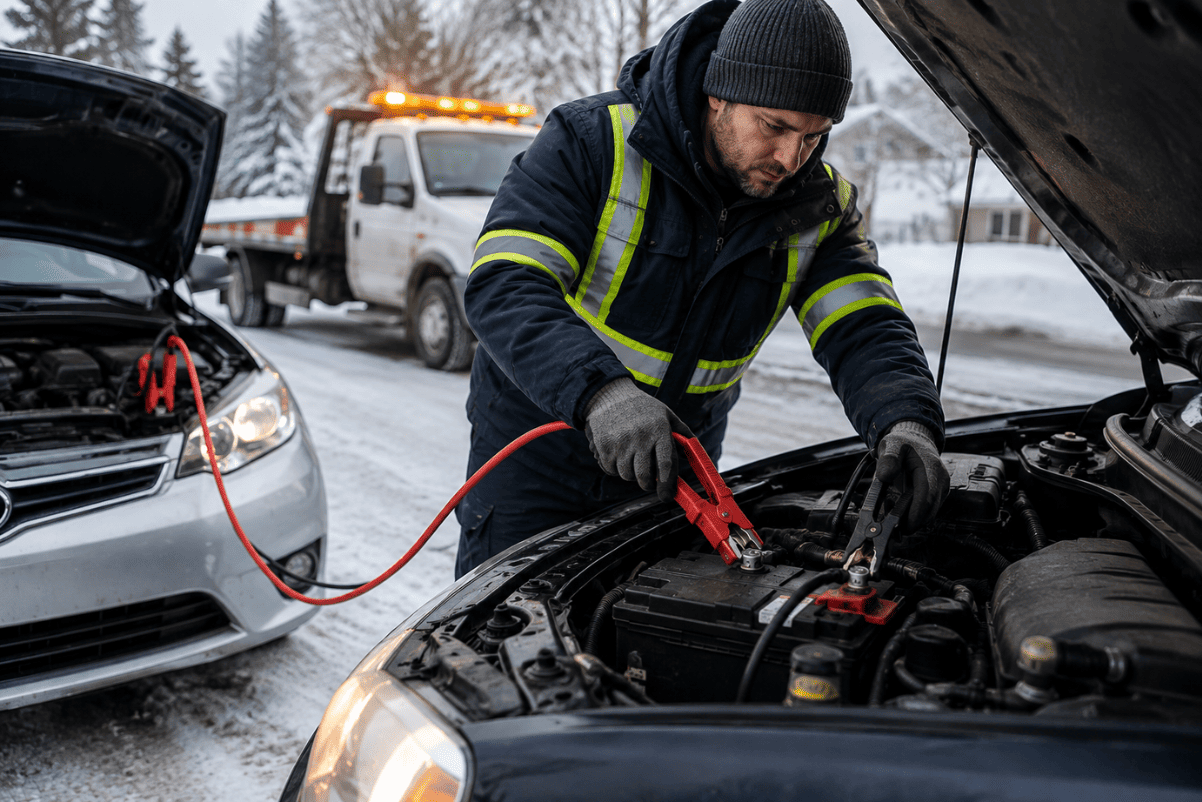
A roadside professional can test the battery and its connections to determine whether a boost is likely to help. If the battery has enough power but the engine still does not start, the vehicle may require towing and further inspection.
Car Won’t Start in the Cold but the Battery Is Good
A battery can appear healthy and still be unable to start a cold engine. For example, the lights may work, and a basic voltage check may show that the battery has power. However, this does not always mean the battery can provide enough strength when the starter motor is placed under a heavy load.
A proper battery test checks how the battery performs under pressure. This gives a more accurate picture than simply looking at the dashboard lights or checking the battery’s basic power level.
When the battery is working properly, other possible causes include:
- Loose, dirty, or damaged battery connections
- A worn starting component
- A charging-system problem
- Engine oil that is not suitable for cold conditions
- A fuel-delivery problem
- A faulty engine sensor
These problems usually require professional testing. Continuing to try the ignition is unlikely to help if the battery is not the main cause.
Car Won’t Start When Cold but Starts When Warm
Sometimes a car will not start early in the morning but starts later after the temperature rises. This can happen because warmer temperatures allow the battery to provide more power. The engine oil also becomes easier to move, reducing the amount of effort needed to turn the engine.
However, a car that starts later may still have a developing problem. The battery could be getting weak, a connection may be loose, or another part may be close to failing.
Do not ignore the issue just because the vehicle eventually starts. It may fail again during the next cold morning, possibly when you are farther from home or unable to wait for warmer weather.
Will the Car Start When It Warms Up?
It might, but there is no guarantee.
Waiting may help when the battery is only slightly weak or the engine is extremely cold. It will not repair a failed starting component, loose connection, charging problem, or serious electrical fault.
When you need to leave quickly, requesting a battery boost is usually more practical than waiting for the outside temperature to rise. If the car still does not start after a professional boost, it may need to be towed to a repair shop.
When Should You Request a Battery Boost?
A battery boost may help when:
- You hear fast clicking
- The engine turns slowly
- The dashboard lights become dim when you try to start
- The battery was drained by lights or accessories
- The car has been parked for several days
- The weather became much colder overnight
A professional battery boost provides the battery with extra power so the engine can start. In many cases, this is enough to get the vehicle moving again.
However, a boost is not always a permanent solution. The battery may be old, undercharged, or unable to hold power properly. The vehicle may also have a charging-system problem that prevents the battery from recharging while the engine is running.
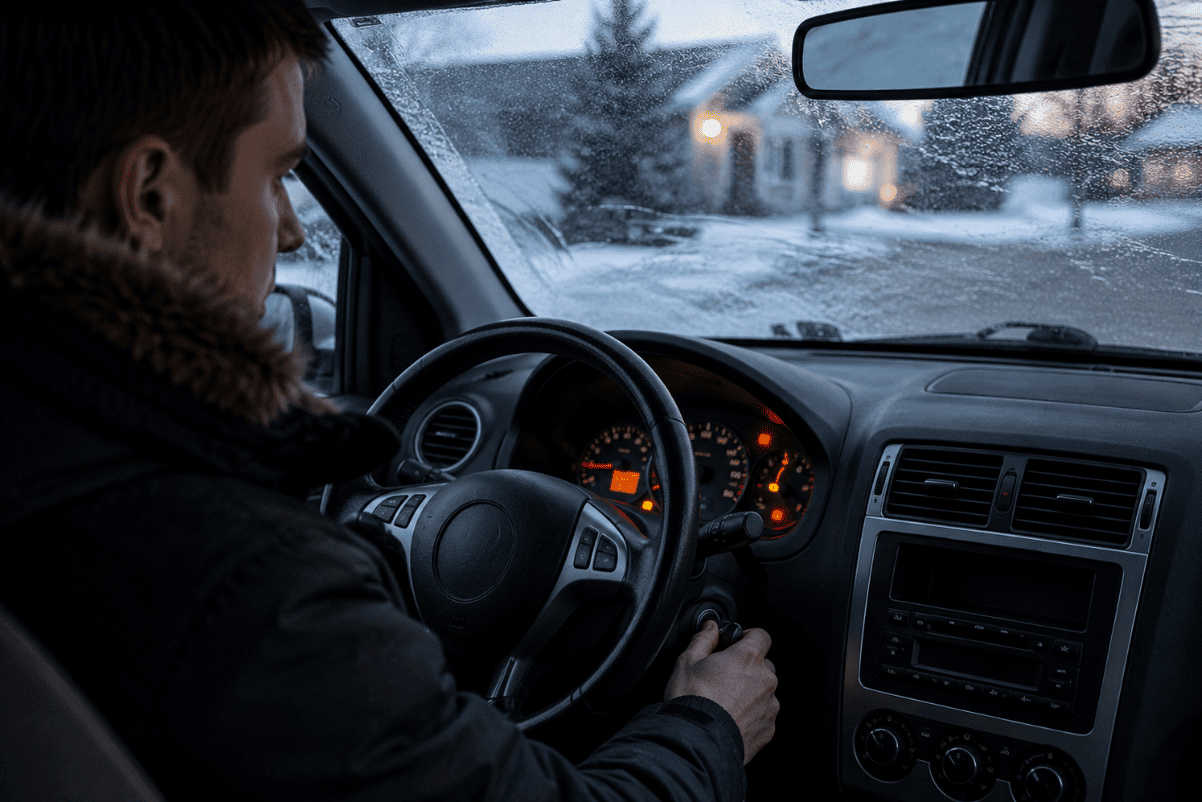
Have the battery checked after receiving a boost, especially if the same starting problem happens again. Repeatedly needing a boost is usually a sign that the battery or charging system needs attention.
When Is Towing the Better Choice?
A tow may be the safer and more practical option when:
- A battery boost does not work
- The engine turns normally but will not start
- The vehicle starts and then stops again
- You smell fuel or something burning
- The battery looks cracked, swollen, leaking, or damaged
- Warning lights remain on
- You hear one click but the engine does not turn
- The car is stopped in an unsafe location
- You are unsure how to boost the vehicle safely
Do not keep trying to start the car when nothing is changing. Continued attempts can fully drain the battery and may make it more difficult to identify the original problem.
Halifax towing service – NST offers battery boosts, roadside assistance, emergency towing, and flatbed towing throughout Halifax, NS, and the surrounding areas.
What Not to Do When Your Car Will Not Start
Avoid quick fixes that could damage the vehicle or cause an injury.
Do not pour hot water on the battery, engine, or frozen vehicle parts. Sudden temperature changes can damage components, and spilled water may freeze again. You should also never use an open flame, space heater, or other heating device under the hood.
Do not hit engine parts, the starter, or battery connections. This may cause damage and will not reliably solve the problem.
Do not attempt a jump-start unless you understand the correct procedure for your vehicle. Some modern vehicles have designated connection points, sensitive electrical systems, or batteries located away from the engine compartment. Connecting cables incorrectly can damage electrical components.
Check the owner’s manual or call a roadside professional whenever you are unsure.
How to Prevent Cold-Morning Starting Problems
A few simple habits can reduce the chance of being stranded during cold weather.
Test the Battery Before Winter
Ask for a battery test if the vehicle has started more slowly than usual. Testing is also sensible when the battery is several years old, even if it has not caused an obvious problem yet.
A professional test can show whether the battery is still able to provide enough power under load. Replacing a weak battery before winter is usually easier than dealing with a vehicle that will not start on a freezing morning.
Avoid Relying Only on Short Trips
Starting the engine uses a large amount of battery power. A very short drive may not give the charging system enough time to replace the energy used during startup.
Regular longer drives can help keep a healthy battery charged. However, driving farther will not repair a battery that is already worn out or unable to hold a charge.
Reduce Electrical Use Before Parking
Before switching off the engine, turn off the heater fan, heated seats, lights, radio, rear defroster, and other electrical accessories.
Doing this reduces the electrical demand during the next startup. It is especially helpful during very cold weather, when the battery already has less starting power available.
Check the Battery Area
Occasionally look for loose connections or white, blue, or green buildup around the battery terminals. Corrosion and loose cables can prevent power from reaching the starter properly.
Do not touch or attempt to use a battery that is cracked, leaking, swollen, or giving off a strong unusual smell. Move away from the vehicle and call for professional assistance.
Use the Correct Oil and Consider a Block Heater
Check the owner’s manual for the correct engine oil. Oil that is too thick for the temperature can make the engine more difficult to start.
A block heater may also help in very cold conditions. It warms part of the engine before startup, helping the oil flow more easily and reducing the amount of work required from the battery.
Always follow the vehicle manufacturer’s instructions when choosing and using a block heater.
What Information Should You Give the Towing Company?
When calling for roadside help, clearly explain what happens when you try to start the car. The more information you provide, the easier it is for the towing company to determine whether you are likely to need a battery boost or a tow.
Tell the operator:
- Whether the dashboard lights come on
- Whether you hear fast clicking, one click, or no sound
- Whether the engine turns slowly or normally
- Whether the vehicle started after a previous boost
- Whether you see any warning lights or messages
- Your exact location
- The vehicle’s make and model
You should also mention any unusual smells, visible battery damage, or recent electrical problems. This information helps the roadside team arrive with the appropriate equipment.
Need Help With a Car That Will Not Start in Halifax?
A cold vehicle that refuses to start can quickly interrupt your day. The problem may be a weak battery, but it could also involve a loose connection, charging issue, worn starting component, or another part of the vehicle.
Halifax Towing Service – NST provides fast, professional, and safety-focused roadside assistance throughout Halifax, NS. Service is available 24 hours a day for vehicles that will not start at home, at work, in a parking lot, or beside the road.
Services include:
- Battery boosts
- Emergency towing
- Roadside assistance
- Flatbed towing
- Tire changes
- Fuel delivery
- Long-distance towing
For 24/7 roadside assistance or towing in Halifax, call Halifax towing service at +1 902-989-4848.
Frequently Asked Questions
Why does my car click but not start when it is cold?
Fast clicking usually means the battery does not have enough power to start the engine. One click may indicate a poor battery connection or a problem with the component that turns the engine.
Can the battery be weak even when the lights work?
Yes. The lights and radio use much less power than the engine needs during startup. A weak battery may operate these accessories while still being unable to start the car.
How many times should I try to start a cold car?
Try to start the car for no longer than about 10 seconds at a time. Wait around 30 seconds before trying again. Stop after three or four failed attempts and request roadside assistance.
Should I keep driving after a battery boost?
You may be able to continue driving after a successful boost, but the battery should be tested soon. Pull over safely and request help if the vehicle begins losing power, warning lights appear, or the engine stops again.
Can a tow truck boost my battery?
Yes. A roadside towing company can often provide a professional battery boost at your location. If the boost does not solve the problem, the vehicle may need to be towed for inspection.
Why does my car start later when the weather gets warmer?
Warmer temperatures can help a weak battery produce more power and make the engine easier to turn. However, the vehicle may still have a developing battery, connection, or mechanical problem that needs attention.