
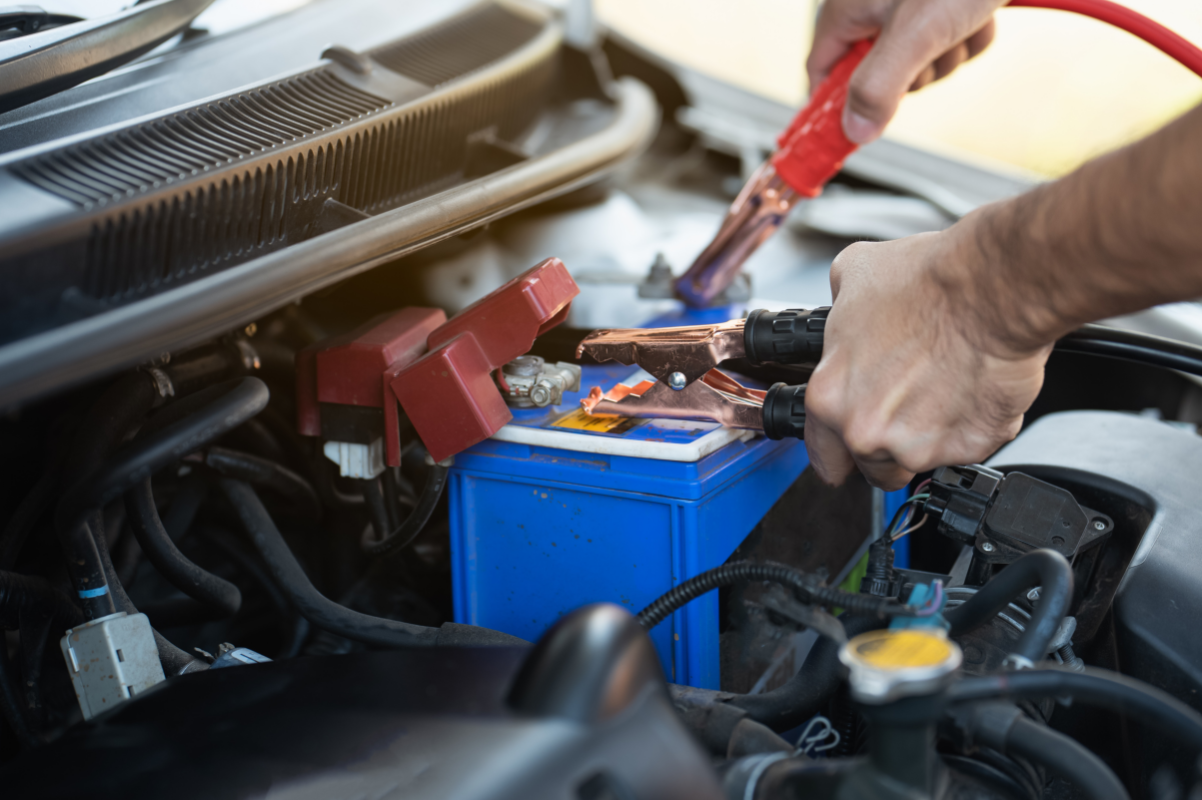
A parasitic battery drain occurs when an electrical component continues drawing more power than it should after your vehicle has been turned off. Some battery use while a car is parked is completely normal because systems such as the clock, alarm, computer memory, security features, and keyless-entry functions still need a small amount of electricity. The problem starts when that draw becomes excessive and gradually drains the battery until there is not enough power left to start the engine.
If your car battery keeps dying overnight or after sitting for several days, a parasitic draw could be responsible. However, similar symptoms can also come from a weak battery, a charging-system fault, damaged wiring, or an alternator problem. That is why identifying the actual cause is important before replacing batteries or other electrical components.
What Is a Parasitic Battery Drain?
Parasitic battery drain, sometimes called parasitic draw or key-off battery drain, refers to electrical current that continues flowing from the battery while the vehicle is parked and switched off. Some of this current is expected, especially in modern vehicles that rely on security systems, sensors, control modules, clocks, and other electronics that remain active or enter a low-power state after shutdown. Fluke describes parasitic-drain testing as measuring the current being drawn from a battery while the ignition is off.
The real question is not whether the vehicle uses electricity while parked, but how much power it is using and whether its electronic systems have entered their normal sleep state. NOCO gives commonly cited guidance of below 50 milliamps for older vehicles and roughly 50 to 85 milliamps for many newer vehicles. These figures are useful as general reference points, but they are not universal specifications. Acceptable draw varies by vehicle, equipment level, and manufacturer requirements.
What Causes a Parasitic Battery Drain?
There is no single cause of parasitic battery drain. In most cases, the problem comes from a circuit or electrical component that stays active when it should have switched off or entered a low-power state.
Interior, Trunk or Glove Box Lights
A small light may not seem capable of causing a serious battery problem, but if it remains on for hours, it can gradually discharge the battery. A faulty door switch, trunk switch, glove box switch, or wiring issue may keep a light powered even when the compartment appears to be properly closed.
Aftermarket Electrical Accessories
Dash cameras, stereos, alarms, remote starters, tracking devices, chargers, and other aftermarket accessories can also create excessive battery draw. Problems are especially common when a device is incorrectly installed or connected to a circuit that remains powered after the vehicle is turned off. Even an accessory that worked properly at first can become a problem later if a connection is damaged or the device develops an internal fault.
Vehicle Modules That Do Not Go to Sleep
Modern vehicles rely on numerous electronic control modules, and many of them remain active for a short period after the engine is shut down. Normally, they eventually enter a sleep or low-power state. A software problem, faulty sensor, communication issue, or another electrical malfunction can prevent one or more modules from going to sleep, leaving the vehicle with a higher-than-normal key-off current draw.
Stuck Relays or Electrical Faults
Relays control power to many vehicle systems. If a relay sticks in the closed position, it can continue supplying electricity to a component even after the ignition has been turned off. Corroded connections, damaged wiring, poor grounds, and unintended electrical paths can create similar problems and may be more difficult to locate if the fault is intermittent.
Alternator Problems
The alternator is responsible for charging the battery while the engine is running, but certain alternator faults can also contribute to battery-drain complaints. Fluke notes that failed rectifier diodes, for example, can be associated with both charging-system problems and battery drain. This is one reason a proper diagnosis should consider the alternator rather than focusing only on lights and accessories.
The Battery Itself May Be Weak
A battery that repeatedly goes flat does not automatically mean the vehicle has a parasitic drain. An older, damaged, deeply discharged, or poorly charged battery may simply have limited capacity and be unable to hold enough energy for reliable starting. A charging-system problem can also leave the battery undercharged, making an otherwise normal key-off draw seem much more severe.
For that reason, a good diagnostic process checks the condition of the battery and the charging system before assuming that an electrical circuit is responsible.
Parasitic Battery Drain Symptoms
The timing and pattern of the problem can provide useful clues. Common symptoms include:
- The battery dies after the vehicle sits overnight or for several days
- The vehicle needs repeated battery boosts
- A new or recently charged battery keeps losing power
- An interior, trunk, or accessory light stays on
- Electrical accessories behave strangely after the vehicle is switched off
- The engine cranks slowly after the vehicle has been parked
A single dead battery does not necessarily point to a parasitic draw. Leaving the headlights on, for example, can cause a one-time discharge. The situation becomes more suspicious when the battery repeatedly loses power after the vehicle has been parked, especially when there is no obvious electrical load left on.
Is It a Parasitic Drain, Bad Battery or Alternator Problem?
Several different faults can leave a vehicle unable to start, and the symptoms often overlap. Looking at the pattern can help narrow down the possibilities.
| What You Notice | Possible Explanation |
| Battery dies after sitting repeatedly | Parasitic draw or weak battery |
| New battery also loses charge while parked | Electrical draw or charging problem needs diagnosis |
| Battery went dead after a light was left on | Known electrical load rather than an unexplained drain |
| Charging warning appears or vehicle loses electrical power while running | Charging-system fault may be involved |
| Starting becomes noticeably harder in cold weather | Weak or undercharged battery may be contributing |
| Repeated boosts work temporarily but the problem returns | The underlying fault has not been corrected |
Cold weather can make an existing battery problem much more obvious. Transport Canada specifically recommends checking battery condition and the charging system for winter because cold-weather starting requires a properly charged battery.
For drivers in Halifax, NS, that means a marginal battery or ongoing electrical draw may not become obvious until a particularly cold morning places extra demand on the starting system.
How a Parasitic Battery Drain Test Works
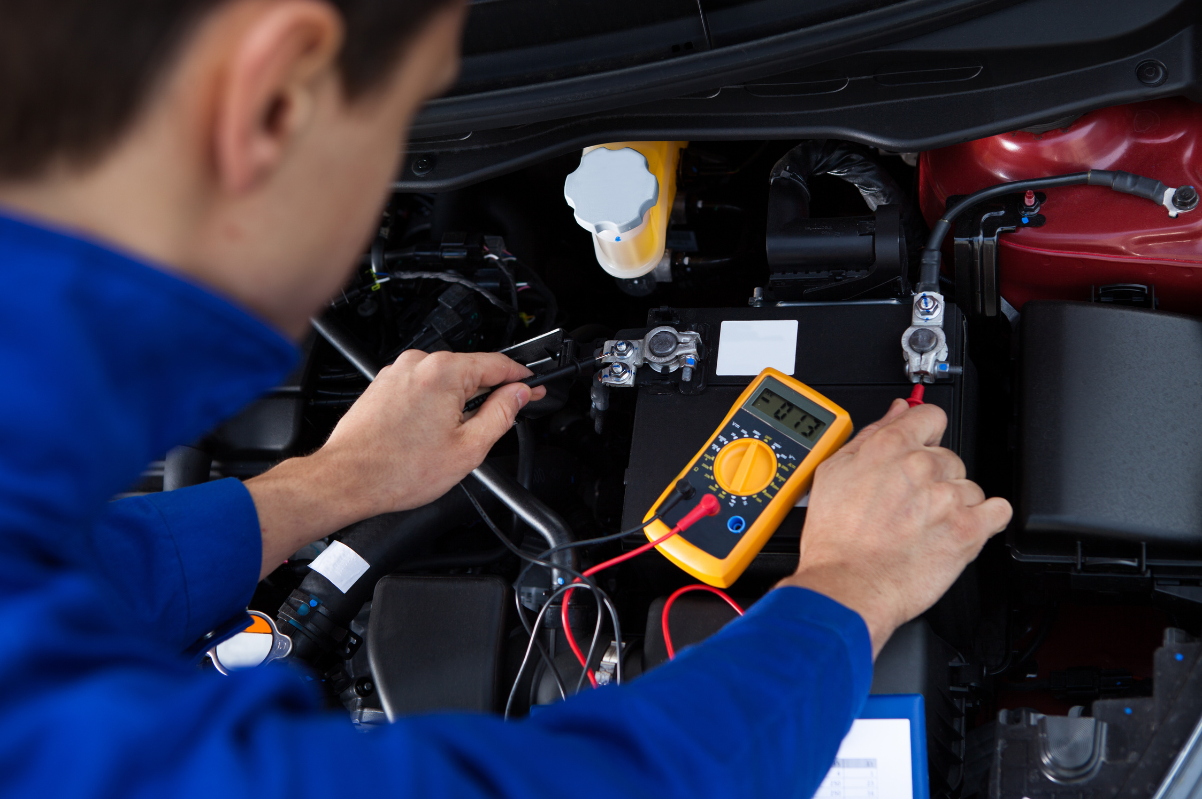
A proper parasitic battery drain test measures how much electricity the vehicle continues to use after it has been switched off and its electronic systems have had enough time to enter their normal sleep state. Diagnosis generally begins by confirming that the battery is properly charged and capable of holding that charge. The charging system is then checked to make sure the alternator is supplying power correctly while the engine is running.
Once those basics have been ruled out, the vehicle is allowed to enter its normal key-off state before resting current is measured with suitable diagnostic equipment. If the reading is abnormally high, the next step is to isolate the circuit responsible and inspect the components connected to it. A digital multimeter or other automotive electrical diagnostic equipment may be used during this process. Fluke identifies current measured in milliamps with the ignition off as the key measurement for detecting hidden battery drain.
Because electrical testing can involve direct work around the battery and vehicle circuits, manufacturer service information should always be followed. More complicated electrical diagnosis, especially on modern vehicles with multiple electronic modules, is often best handled by a qualified automotive technician.
Why Diagnosis Can Take Time
Modern vehicles do not shut down every electrical system the moment the key is removed or the start button is pressed. Some modules remain active temporarily, while others may wake up when a door is opened, a key fob is detected nearby, or another electronic system communicates across the vehicle network.
That behavior can make intermittent parasitic drains difficult to reproduce. A vehicle may show normal electrical draw during one test and excessive draw later, which is why proper diagnosis sometimes takes longer than expected. Replacing parts at random can quickly become expensive without ever correcting the actual problem.
How Long Does Parasitic Battery Drain Take to Kill a Battery?
There is no fixed amount of time because the answer depends on several factors, including the size of the electrical draw, battery capacity, battery condition, current state of charge, temperature, and the amount of power the vehicle requires to start.
A simple calculation helps show why the size of the draw matters. A constant 100 mA draw uses about 2.4 amp-hours of battery capacity each day, while a 500 mA draw uses about 12 amp-hours per day. That does not mean a particular battery will become completely unusable after an exact number of days, because a vehicle can lose the ability to start long before every available amp-hour has been consumed.
Interstate Batteries also notes that key-off or parasitic drain continues while a vehicle sits unused and can eventually discharge the battery.
Will a Battery Boost Fix Parasitic Drain?
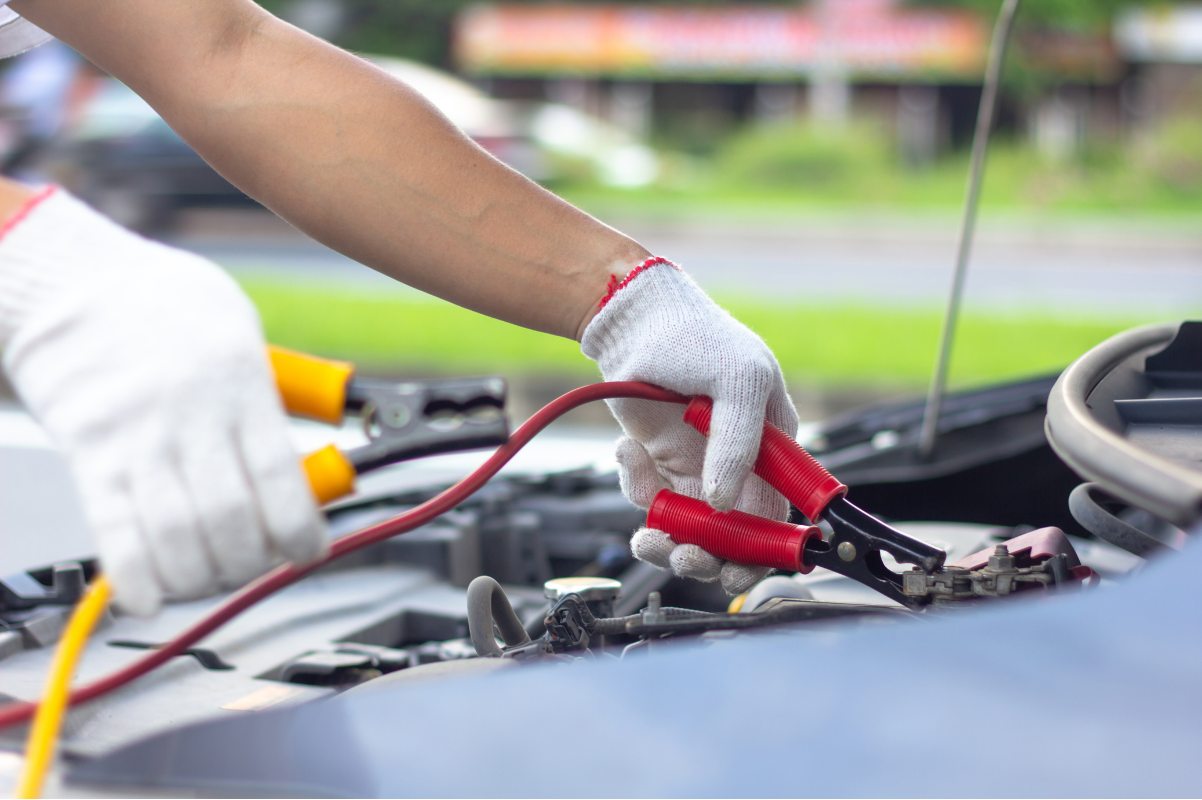
A battery boost can get the vehicle started, but it does not repair a parasitic battery drain. A boost addresses the immediate problem by providing enough power to start the engine. If an electrical component continues consuming excessive electricity after the vehicle is parked again, the battery may be dead the next morning or a few days later.
If the vehicle starts after a boost and otherwise operates normally, it is a good idea to have the battery, charging system, and key-off electrical draw checked. If you plan to handle a discharged battery yourself, make sure you understand how to jump start a car safely. If the vehicle displays charging warnings, develops serious electrical problems, or cannot be driven safely, using a towing service in Halifax to transport it to a repair facility may be the safer option.
What to Do If Your Battery Is Dead in Halifax
If you walk out to your vehicle and discover that the battery is too weak to start the engine, the first priority is getting the vehicle safely running or transported.
Halifax Towing Service – NST provides 24/7 battery boost, roadside assistance in Halifax, and emergency towing in Halifax, NS and surrounding areas. A roadside battery boost may be enough to get you moving when the battery is discharged.
If the problem keeps coming back, however, repeated boosts are not a permanent solution. A battery that continually loses power should be properly diagnosed to determine whether the cause is a parasitic draw, a weak battery, an alternator fault, a charging-system issue, or another electrical problem.
For roadside assistance, call +1 902-989-4848.
How Do You Fix a Parasitic Battery Drain?
The correct repair depends entirely on what is drawing the power. A light that remains on may need a switch adjustment or replacement, while a stuck relay may simply need replacement. An improperly installed accessory may require rewiring, and a faulty control module may require further diagnosis, repair, programming, or manufacturer-specific service.
If the alternator or charging system is at fault, repairing the fault makes far more sense than repeatedly replacing discharged batteries. The most important principle is straightforward: find the source of the excessive electrical draw first, then repair that source.
Replacing the battery without correcting an abnormal drain may make the problem disappear temporarily because the new battery has more usable capacity. If the excessive draw is still present, however, the replacement battery can eventually discharge as well.
What Affects Parasitic Battery Drain Repair Cost?
There is no dependable flat price for repairing parasitic battery drain because the cause can range from a simple switch or relay to a difficult intermittent wiring fault or electronic module problem. The final cost usually depends on how much diagnostic work is required, how difficult the affected circuit is to access, and which component ultimately needs repair or replacement.
Accurate diagnosis before parts are replaced can help prevent unnecessary spending on batteries, alternators, accessories, or other components that were not responsible for the original problem.
How to Reduce the Risk of Battery Drain
A few basic habits can reduce the likelihood of avoidable battery problems. Make sure interior, trunk, glove box, and exterior lights switch off properly, and unplug unnecessary devices from powered outlets when the vehicle is parked. If battery problems begin shortly after a new stereo, dash camera, alarm, remote starter, or other electrical accessory is installed, have the installation checked.
Vehicles that regularly sit unused for long periods may also need additional battery care. Follow the vehicle and battery manufacturer’s storage and maintenance recommendations. Interstate Batteries notes that parked vehicles continue to have key-off electrical loads even when they are not being driven.
Most importantly, do not treat repeated boosts as normal. If the same vehicle needs another boost shortly after the battery was charged or replaced, there is usually a reason the battery is losing power, and finding that reason can prevent the problem from becoming a recurring inconvenience.
Frequently Asked Questions About Parasitic Battery Drain
What is the most common cause of parasitic battery drain?
Common causes include interior or compartment lights that stay on, improperly connected aftermarket accessories, electronic modules that fail to enter sleep mode, stuck relays, wiring faults, and certain alternator problems. There is no single cause that applies to every vehicle.
How do you fix a parasitic battery drain?
The excessive electrical draw first has to be traced to the affected circuit or component. Depending on what is found, the repair could involve fixing wiring, replacing a switch or relay, correcting an accessory installation, repairing an alternator fault, or addressing an electronic control module problem.
How can you tell if your car has a parasitic drain?
One of the most common clues is a battery that repeatedly loses charge while the vehicle is parked. If the battery and charging system both test properly but the battery continues going dead after the vehicle sits, key-off electrical draw should be investigated.
Will a new battery fix parasitic battery drain?
Not if another component is causing excessive electrical draw. A new battery may temporarily hide the symptoms because it has more available capacity, but the underlying drain can eventually discharge the replacement battery as well.
What is a normal parasitic draw on a car battery?
There is no single number that applies to every vehicle. Commonly cited guidance places many older vehicles below about 50 mA and some newer vehicles around 50 to 85 mA once their systems have entered sleep mode. Manufacturer specifications should always take priority because modern vehicle electrical systems vary considerably.
Can a bad alternator cause parasitic battery drain?
Yes. Certain alternator faults, including problems involving rectifier diodes, can contribute to battery drain or charging-system issues. The alternator should therefore be considered during diagnosis rather than assuming that every dead battery is caused by an accessory, light, or other key-off electrical load.
Need Help With a Dead Car Battery?
A dead battery can leave you stranded even when the underlying problem turns out to be relatively minor. If your vehicle will not start, Halifax Towing Service – NST offers 24/7 battery boosts and roadside assistance, along with flatbed towing, emergency towing, tire changes, fuel delivery, and long-distance towing when roadside service is not enough.
Halifax Towing Service – NST
301 Lacewood Dr, Halifax, NS B3M 4L1, Canada
Phone: +1 902-989-4848
A battery boost can solve the immediate no-start problem. If the battery keeps going dead, however, have the underlying cause diagnosed so you are not dealing with the same problem again.